

Vented Induction Hobs – Induction Hobs with Built-In Extraction
Shop vented induction hobs that combine responsive induction cooking with extraction built into the cooking surface. Compare hob width, cooking zones, flexible cooking areas, ducted or recirculating installation, extractor airflow, noise, filters and cabinet requirements before choosing the right model for your kitchen.
How to choose a vented induction hob
A vented induction hob combines two appliances in one: an induction cooking surface and a downdraft extractor that captures steam and cooking vapour close to the pans. It can remove the need for an overhead cooker hood, making this format particularly useful for kitchen islands, open-plan rooms and kitchens with high or uninterrupted ceilings.
Installation requires more planning than a conventional induction hob. As well as the worktop cut-out and electrical supply, check the space required below the worktop for the extractor motor, filters, ducting or recirculation components and any drawers or cabinet storage.
| What to compare | Why it matters |
|---|---|
| Hob width | Determines worktop space and cooking area; current designs range from compact models to 90cm and larger hobs. |
| Cooking zones | Most models use four induction zones, but compact and specialist products can use different layouts. |
| Flexible zones | Bridge and flexible cooking functions make it easier to use griddles, roasting pans and larger cookware. |
| Extraction type | Choose ducted extraction, recirculation or a model that supports either installation method. |
| Airflow | Indicates the extractor's ability to move air, but should be compared on the same normal or boost setting. |
| Noise | Particularly important in open-plan kitchens; compare figures measured at equivalent fan settings. |
| Filters | Grease and odour filters require cleaning, regeneration or replacement depending on the design. |
| Cabinet requirements | The extractor motor and airflow route can reduce usable cabinet or drawer space below the worktop. |
Ducted or recirculating vented induction hob?
Ducted extraction
A ducted vented hob carries cooking vapour outside the building through an extraction route beneath or behind the kitchen cabinetry. This requires suitable ductwork and a practical route to an external wall or other approved outlet.
Plan the duct route before cabinets and worktops are finalised. Long runs, unnecessary bends and restrictive ducting can affect extraction performance, so follow the dimensions and installation components specified by the hob manufacturer.
Recirculating extraction
A recirculating vented hob filters the extracted air before returning it to the kitchen. This can be useful on islands and in properties where external ducting is impractical.
Recirculating systems normally require grease filtration plus an odour or activated-carbon filter. Some filters are replaceable, while others can be cleaned or regenerated for a defined number of cycles. Check the exact maintenance requirements and whether the necessary recirculation components are included with the appliance.
Models that support both
Many vented induction hobs can be configured for either ducted or recirculating use, but this is not universal. Some products are sold as dedicated duct-out and recirculation versions, while selected models support only one extraction method.
Choose the required installation configuration before ordering cabinetry or ducting accessories rather than assuming that every version of the same hob family can be converted later.
Vented induction hob sizes
Vented induction hobs are available in several nominal widths. Compact 60cm models are useful where worktop space is limited, while 70cm to 83cm models provide more cooking space and are common within this category. Wider 88cm, 90cm and specialist 100cm-plus products are also available.
Nominal width is only a shopping category. Check the exact overall dimensions and manufacturer-specified worktop cut-out because two products sold as 80cm models can require different openings.
Cooking zones and flexible induction areas
Most vented induction hobs provide four induction zones arranged around a central or offset extractor inlet. Selected models allow neighbouring zones to be linked together to form larger cooking areas for griddles, fish pans and roasting dishes.
Manufacturers use different terminology for flexible zones, including Bridge, Flex, PowerFlex, SmartZone and Combi Zone. These features perform broadly similar jobs but differ in zone size, positioning and automatic pan detection.
Specialist models can use alternative layouts, including compact two-zone designs, three-zone hobs, flexible full-width cooking areas or vented cooking systems incorporating Teppanyaki or wok surfaces.
Airflow and extraction performance
Extractor airflow is usually stated in cubic metres per hour. Compare figures taken under equivalent operating conditions: normal maximum airflow should be compared with normal maximum airflow, while intensive or boost figures should be compared separately.
Higher airflow is not automatically better for every kitchen. The required performance depends on cooking style, installation, duct route and room layout, while higher fan settings generally increase noise and energy use.
Noise levels
Extractor noise varies according to fan speed and whether the installation is ducted or recirculating. Some manufacturers publish minimum, maximum and intensive sound levels, while retailer data may show only one figure.
For a useful comparison, identify what the stated dB figure represents. Do not compare one model's minimum-speed figure against another model's boost figure.
Extractor energy class
The energy class shown for a vented induction hob relates to its extraction system rather than the efficiency of the induction cooking zones. Depending on the model, additional label information can include fluid-dynamic efficiency and grease-filtering efficiency.
Use energy class as one comparison point alongside airflow, noise, filter maintenance and installation requirements rather than treating it as a measure of the complete cooking appliance.
Bridge zones and flexible cooking
Flexible induction functions allow neighbouring cooking zones to operate together for larger cookware. This is particularly useful on extractor hobs because the central ventilation inlet can affect the amount and shape of uninterrupted cooking space.
Check whether flexible zones are available on one side or both sides of the hob and whether they automatically recognise cookware position or require the zones to be linked manually.
Automatic extraction
Selected vented hobs automatically adjust extractor power according to cooking activity. Depending on the manufacturer, this can respond to selected hob power levels, detected cooking conditions or dedicated extraction sensors.
Automatic extraction should not automatically be classified as smart or Wi-Fi connectivity. A hob can control its own built-in extractor without being connected to an app or home network.
Smart and connected vented induction hobs
Selected models provide genuine Wi-Fi or app connectivity for functions such as monitoring, settings or cooking guidance. Connectivity is model specific and should be verified separately from automatic extraction, bridge zones or hob-to-hood communication features.
Filters and cleaning
Grease filters are normally removable and many current models use dishwasher-safe filter components. Clean them at the interval recommended by the manufacturer because accumulated grease can reduce extraction performance.
Recirculating appliances also use odour filtration. Depending on the system, these filters may need regular replacement or may be washable and regenerable for a limited service life.
The extractor inlet, spill tray and liquid-collection system should also remain accessible. Many current designs allow the central grille and collection components to be removed from above the worktop for cleaning.
Worktop and cabinet installation
Vented induction hobs can require considerably more space beneath the worktop than an ordinary induction hob. Check motor depth, duct position, filter access and the minimum cabinet dimensions before planning drawers immediately below the appliance.
Some models fit above a standard-width base cabinet despite having a wider cooking surface, while others require wider cabinetry. Use the exact planning drawing rather than relying on the advertised hob width.
Flush or surface mounting
Many vented induction hobs support flush or surface-mounted installation. Flush fitting can create a more continuous worktop appearance, but it requires precise preparation and a suitable worktop material.
Other models are designed for surface mounting only. Check the individual installation specification before the worktop is cut.
Electrical requirements
Vented induction hobs normally require a substantial fixed electrical supply because the appliance powers both induction cooking and extraction. Maximum connected loads around 7kW are common, although exact requirements and power-management options vary.
Confirm the available electrical circuit, phases, cable requirements and manufacturer instructions before ordering and use an appropriately qualified electrician for installation.
Vented induction hob FAQs
What is a vented induction hob?
It is an induction hob with an extractor built into the cooking surface. The extractor draws cooking vapour down at hob level instead of relying on a separate cooker hood above the hob.
Is a vented hob the same as an induction extractor hob?
Yes. Vented induction hob, induction extractor hob, venting hob and induction hob with built-in extractor are commonly used for the same general appliance type.
Do vented induction hobs need ducting outside?
Not always. Many support recirculation, while others support ducted extraction or are offered in separate ducted and recirculating versions. Check the exact product before planning the installation.
Are recirculating vented hobs effective?
They can provide an effective solution where external ducting is unavailable, but performance depends on correct installation and maintaining the grease and odour filters. Ducted and recirculating airflow figures can also differ.
Can I install a vented induction hob on a kitchen island?
Yes, this is one of their main applications because extraction is integrated at worktop level. The cabinet below the island still needs enough space for the extractor, filters and the chosen ducted or recirculating airflow route.
What size vented induction hob should I choose?
Choose according to available worktop and cabinet space as well as the amount of cooking area required. Common formats include approximately 60cm, 70cm, 80cm and 90cm, but exact appliance and cut-out dimensions vary.
Do vented induction hobs need special pans?
Yes, because the cooking technology is induction. Cookware needs a suitable magnetic base and must meet the manufacturer's minimum size requirements.
What does the energy class on a vented induction hob mean?
The A to G-style extraction rating shown for these appliances relates to the built-in extractor system rather than the induction cooking zones.
How noisy are vented induction hobs?
Noise varies with extractor speed and installation. Compare manufacturer figures at equivalent normal and intensive settings rather than using a single dB number without context.
How often do the filters need cleaning?
Grease filters should be cleaned according to the manufacturer's maintenance schedule. Odour filters used for recirculation can require replacement or regeneration at separate intervals depending on their design.
Related hob categories
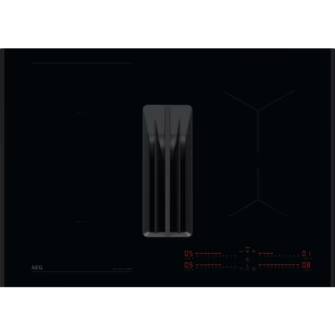


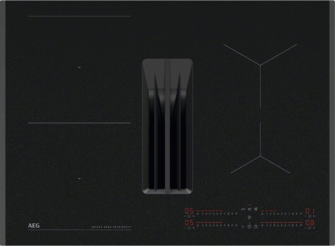
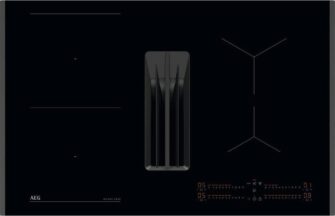
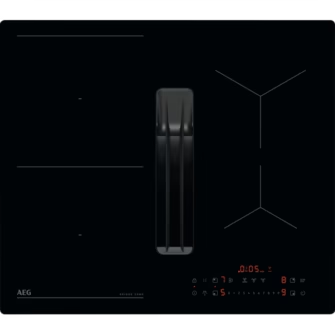

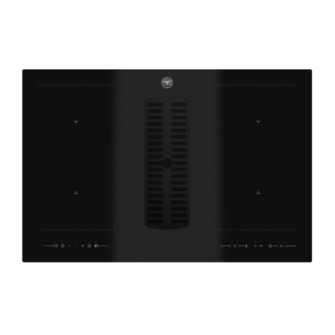
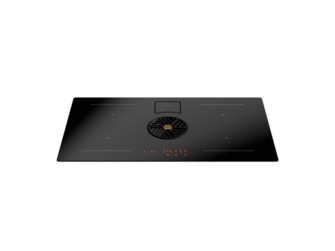



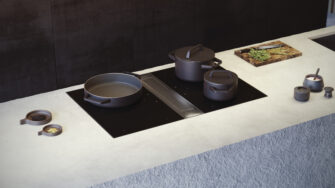


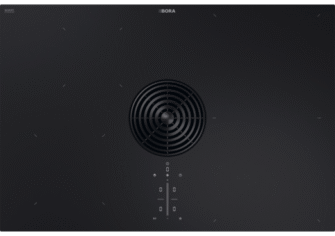

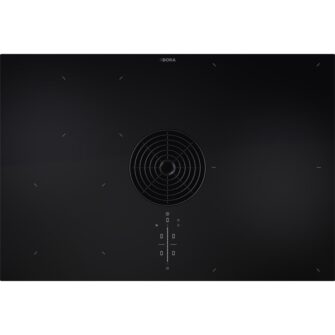


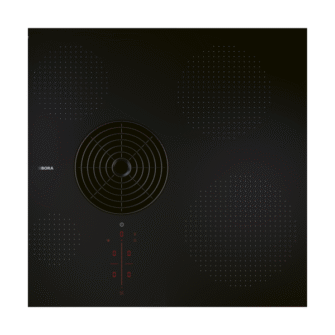
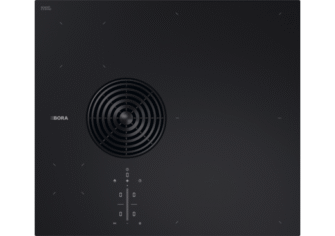
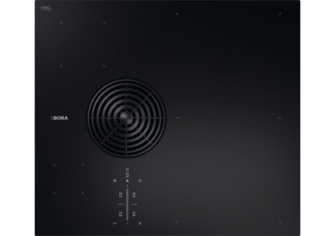


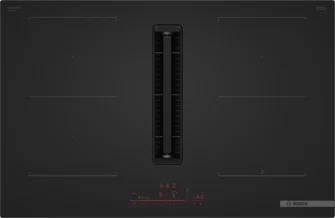
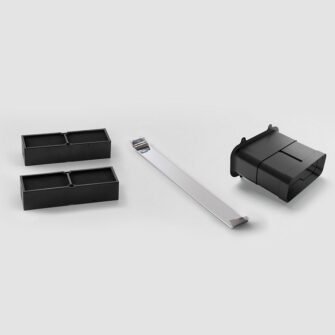

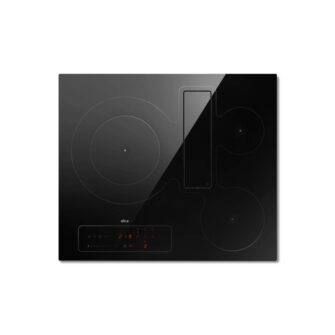


Electric Induction Hobs offer safe, efficient, and easy-to-clean cooking with cutting-edge technology. They heat only the pan, keeping surface temperatures low for safety. Available in various configurations, including flex and bridge zones, and free induction options for ultimate cooking flexibility.

Gas Burner Hobs provide unmatched flexibility with instant control and efficient cooking. Available with four, five, or six burners, they accommodate various cooking needs. For high-power wok cooking, choose a model with a dedicated wok burner. Base materials include stainless steel and glass, allowing you to select the perfect match for your kitchen’s aesthetic.

Electric Ceramic Hobs offer a sleek, modern cooking surface with easy cleaning and precise heat control. Their smooth glass surface ensures efficient heat transfer and a stylish look, making them a practical and attractive choice for any kitchen. Enjoy effortless cooking and maintenance with ceramic hobs.