

Ceramic Hobs – Electric Radiant Hobs from 30cm to 90cm
Shop ceramic hobs with smooth electric cooking surfaces in compact domino, standard 60cm and wider designs. Compare cooking zones, expandable heating areas, touch or rotary controls, exact installation dimensions, electrical load and finishes before choosing the right ceramic hob for your kitchen.
How to choose a ceramic hob
A ceramic hob uses electric radiant heating elements beneath a smooth glass-ceramic surface. The element heats the glass, which then transfers heat into the cookware. This differs from induction, where magnetic energy heats compatible pans directly.
Start with the worktop space and electrical supply, then compare the number and size of cooking zones. Current ceramic hobs range from narrow two-zone domino models to standard four-zone designs and wider five-zone cooking surfaces.
| What to compare | Why it matters |
|---|---|
| Width | Determines the overall worktop space required, although the exact cut-out can be narrower than the visible hob. |
| Cooking zones | Two-zone domino hobs suit compact or supplementary installations, while four and five-zone models provide more everyday cooking space. |
| Expandable zones | Dual, triple and extended radiant zones can adapt the heated area to different pan sizes and roasting cookware. |
| Controls | Models use touch, slider or rotary controls depending on the design. |
| Electrical load | Most full-size ceramic hobs require a suitable hardwired electrical supply rather than an ordinary plug socket. |
| Installation | Check exact hob dimensions, worktop cut-out and whether the model supports surface or flush fitting. |
Ceramic or induction hob?
Ceramic and induction hobs can look similar because both commonly use a flat black glass surface, but the heating technology is different.
A ceramic hob heats an electric radiant element beneath the glass. The hot glass then transfers heat to the pan. An induction hob generates heat directly in compatible magnetic cookware.
This means a ceramic hob does not require an induction-compatible magnetic pan base. Suitable flat-bottomed cookware can be used in accordance with the hob manufacturer's recommendations.
The trade-off is residual heat. Because the glass itself becomes hot during ceramic cooking, the surface stays warm after a cooking zone is switched off. Residual-heat indicators show when the surface remains too hot to touch.
30cm domino ceramic hobs
A ceramic domino hob provides a narrow cooking surface with two radiant zones. It can suit a compact kitchen, a utility or secondary cooking area, or a modular layout where different cooking technologies are being combined.
Check the exact width rather than relying solely on the 30cm description. Current compact models in this range are slightly under 30cm wide and require their own specific worktop cut-out.
58cm and 60cm ceramic hobs
Approximately 60cm is the main ceramic-hob size in this range. Most models provide four cooking zones and are designed around a conventional built-in hob opening.
Exact dimensions still vary. Some current models are around 574mm, 580mm or 590mm wide while others are a full 600mm, so an existing worktop cut-out should always be measured before ordering a replacement.
80cm and 90cm ceramic hobs
Wider ceramic hobs provide more room between pans and can add a fifth cooking zone or larger expandable heating areas. They can be useful where several pans are used simultaneously and sufficient worktop width is available.
A wider appliance also has a higher potential electrical load, so check the manufacturer's connection specification as well as the worktop dimensions.
Expandable ceramic cooking zones
Selected ceramic hobs use dual-circuit, triple-circuit or extendable radiant zones. These allow a smaller or larger section of the heating element to be selected according to the size and shape of the cookware.
An extendable roasting zone can be useful for elongated cookware, while a dual or triple circular zone allows different pan diameters to sit over an appropriately sized heated area.
Hi-Light and QuickHeat ceramic zones
Some manufacturers use terms such as Hi-Light or QuickHeat for radiant heating elements designed to reach their operating temperature quickly. These remain conventional ceramic heating systems: the element beneath the glass becomes hot and transfers heat through the surface into the pan.
They should not be classified as induction simply because they offer faster heat-up or electronic power control.
Touch, slider or rotary controls?
Touch controls create a flat control surface with no projecting knobs and can include timers, safety locks and power-level displays. Slider controls allow the power level to be selected along a touch-sensitive scale.
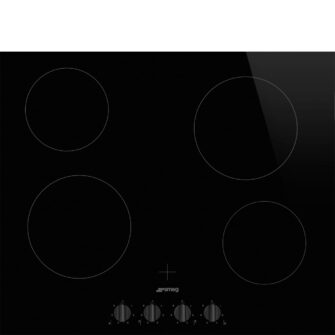
Selected ceramic hobs instead use rotary controls. These can appeal to shoppers who prefer physical knobs rather than touch controls, while retaining the same smooth ceramic cooking surface.
Residual heat indicators and safety
Residual-heat indicators are particularly useful on a radiant ceramic hob because the glass stays hot after a cooking zone has been switched off. The indicator remains active until the surface temperature has fallen sufficiently.
Depending on the model, additional safety functions can include child locks, automatic switch-off, overheating protection and protection against accidental control activation.
Automatic heat-up and pause functions
Selected ceramic hobs can initially operate a zone at higher power before reducing it to the selected cooking level. This helps bring cookware up to temperature more quickly without requiring repeated manual adjustment.
Pause or Stop-and-Go functions reduce the active zones temporarily and restore the previous settings when cooking resumes. Feature names and behaviour vary by manufacturer.
Vented ceramic hobs
Selected BORA Basic models combine radiant ceramic cooking with a downdraft extractor built into the centre of the hob. These differ from the much more common vented induction hob because the cooking zones use radiant electric heating rather than induction.
The current BORA Basic range uses four radiant cooking zones. One version is designed for external exhaust-air extraction, while the other uses recirculation with activated-carbon filtration.
These products require more cabinet planning than an ordinary ceramic hob because space is needed beneath the worktop for the extraction components and airflow route.
Surface or flush installation?
Many ceramic hobs are surface mounted, with the hob edge or frame sitting slightly above the worktop. Selected frameless models also support flush installation, where the glass is installed more level with the surrounding worktop.
Flush installation requires suitable worktop material and precise preparation. Do not assume that every frameless ceramic hob can be fitted flush; use the installation drawing for the exact appliance.
Electrical requirements
Full-size ceramic hobs commonly have several kilowatts of connected electrical load and usually require a suitable fixed electrical connection. Wider models can have particularly high maximum loads.
Check voltage, connected load, fuse or circuit requirements and whether the appliance supports single- or multi-phase connection before purchase. Electrical installation should be carried out by an appropriately qualified installer.
Cleaning a ceramic hob
Allow the surface to cool sufficiently before routine cleaning and use products suitable for glass-ceramic cooking surfaces. Remove loose residue first and avoid abrasive cleaning materials that could scratch the glass.
Burnt-on spills and melted sugary residue can require a suitable ceramic-hob scraper. Follow the manufacturer's cleaning instructions for the individual appliance.
Ceramic hob FAQs
What is a ceramic hob?
A ceramic hob is an electric hob with radiant heating elements beneath a smooth glass-ceramic surface. The element heats the glass and the glass transfers heat to the cookware.
What is the difference between a ceramic and induction hob?
A ceramic hob heats the cooking surface and then the pan. Induction creates heat directly in suitable magnetic cookware, so it generally responds differently and requires induction-compatible pans.
Do ceramic hobs need special pans?
They do not require a magnetic induction-compatible base. Use stable, flat-bottomed cookware that meets the individual manufacturer's recommendations and matches the cooking-zone size.
Does a ceramic hob stay hot after it is switched off?
Yes. The glass retains heat after radiant cooking, which is why ceramic hobs use residual-heat indicators to warn when a zone remains hot.
How many zones does a ceramic hob have?
Compact domino models commonly have two zones, standard ceramic hobs usually have four, and selected wider models provide five cooking zones.
Can ceramic cooking zones change size?
Selected models use dual, triple or extendable radiant zones so that a larger heating area can be activated for bigger or elongated cookware.
Can a ceramic hob be fitted flush with the worktop?
Selected models can, but flush installation depends on the exact hob and worktop material. Check the manufacturer's installation drawing before the worktop is cut.
Do ceramic hobs need to be hardwired?
Most full-size ceramic hobs require an appropriately rated fixed electrical connection because their maximum connected load is higher than a normal domestic plug socket can support. Confirm the exact specification for the individual model.
What is a vented ceramic hob?
It combines radiant ceramic cooking with a built-in downdraft extractor. Unlike a vented induction hob, the cooking zones heat through conventional radiant electric elements beneath the glass.
Are ceramic hobs smart appliances?
The current ceramic hobs in this range are not classified as connected smart appliances. Timers, automatic heat-up and electronic touch controls do not by themselves mean a hob has Wi-Fi or app connectivity.
Related hob categories
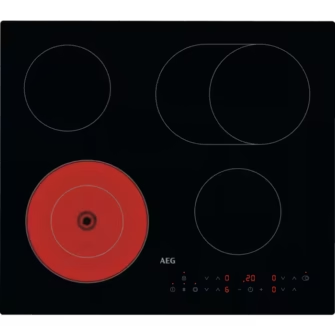



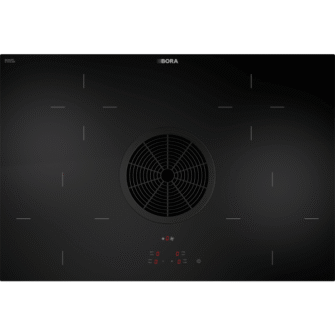


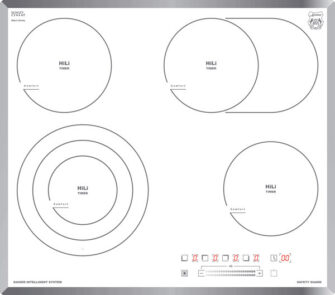
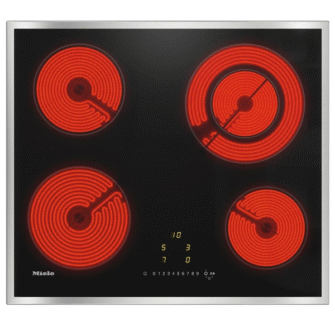
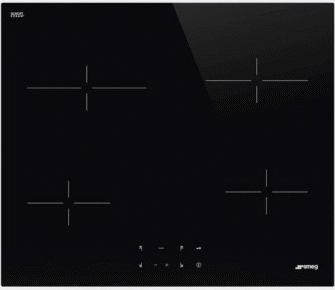




Gas Burner Hobs provide unmatched flexibility with instant control and efficient cooking. Available with four, five, or six burners, they accommodate various cooking needs. For high-power wok cooking, choose a model with a dedicated wok burner. Base materials include stainless steel and glass, allowing you to select the perfect match for your kitchen’s aesthetic.

Electric Induction Hobs offer safe, efficient, and easy-to-clean cooking with cutting-edge technology. They heat only the pan, keeping surface temperatures low for safety. Available in various configurations, including flex and bridge zones, and free induction options for ultimate cooking flexibility.

A Hob with Extractor Built In combines a hob and extraction system into one efficient unit. Featuring advanced induction cooking and built-in vapour extraction, they quickly remove cooking odours and moisture. This practical solution eliminates the need for a separate kitchen extractor.