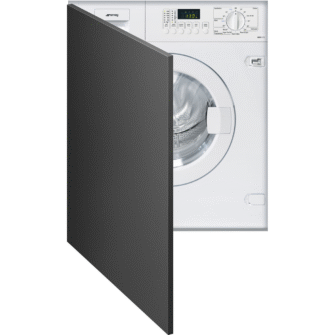

Built-In Washing Machines
Shop built-in washing machines designed for integrated installation behind a matching kitchen or utility-room furniture door. Compare integrated washing machines by drum capacity, spin speed, energy efficiency, noise level and installation dimensions to find the right model for your household and cabinetry.
Choosing a Built-In Washing Machine
Built-in washing machines combine the functions of a standard washing machine with an integrated design that allows the appliance to sit behind a furniture door. They are particularly suited to fitted kitchens and utility rooms where you want the appliance concealed within the surrounding cabinetry.
When comparing models, look beyond brand and price. Capacity, spin speed, energy class, noise level, programme selection and installation dimensions can all affect which washing machine is the better fit for your household.
Washing capacity
Drum capacity determines how much dry laundry the machine can wash in one load. Smaller capacities can work well for lighter everyday washing, while larger drums are useful for households that regularly wash bigger loads, bedding or towels.
Choose capacity according to the laundry you normally wash rather than assuming that a larger drum is always necessary. Two integrated washing machines can have similar external dimensions while offering different usable capacities.
Spin speed
Maximum spin speed is measured in revolutions per minute, or rpm. Higher spin speeds can remove more water from suitable fabrics at the end of a wash, which may reduce subsequent drying time.
The maximum quoted speed is not used on every programme, so it should be considered alongside fabric-care settings, programme choice and the types of laundry you wash most often.
Energy efficiency
Compare the current A-G energy rating when choosing an integrated washing machine. The energy label also provides useful information such as energy consumption, water use, programme duration and rated spin noise.
For households that wash frequently, differences in energy and water consumption can become more significant over the lifetime of the appliance.
Noise level
Spin noise is particularly worth checking if your washing machine will be installed in an open-plan kitchen or close to living and sleeping areas. Noise ratings are given in decibels, but installation quality also matters: a correctly levelled machine with suitable clearances is less likely to suffer from unnecessary movement or vibration.
Check the Installation Dimensions Before Ordering
Do not choose an integrated washing machine on nominal width alone. Appliance height, width and depth can vary between models, and additional space may be needed for hoses, plumbing connections, the furniture door and surrounding cabinetry.
Always compare the manufacturer's installation drawing with the available cabinet space before ordering. This is especially important when replacing an existing built-in washing machine, as hinge positions and furniture-door fixing points are not necessarily identical between brands or models.
Furniture-door fitting
A built-in washing machine is designed to sit behind a separate furniture door that matches your kitchen or utility-room cabinetry. The furniture panel is normally supplied as part of the kitchen rather than with the washing machine.
Check the required furniture-door dimensions, hinge arrangement and fixing positions carefully. An existing door may be reusable when replacing an appliance, but compatibility should never be assumed.
Plumbing and electrical connections
Integrated washing machines require a suitable cold-water supply, waste connection and electrical supply. These connections must also remain accessible enough for installation and servicing without preventing the appliance from sitting correctly within the cabinet.
If you are replacing an older machine, check the position of existing pipework and sockets as well as the dimensions of the appliance itself.
Useful Washing Machine Features to Compare
Features vary between manufacturers and models, so consider which functions will make a practical difference to the way you use the machine.
- Automatic load sensing can adjust water, energy or programme duration according to the size of the load.
- Quick wash programmes are useful for smaller quantities of lightly soiled laundry when a full-length cycle is unnecessary.
- Steam programmes may help refresh suitable garments or reduce creasing, depending on the model.
- Delay start allows a programme to be scheduled for a more convenient time.
- Specialist programmes can provide dedicated settings for fabrics such as wool, synthetics, delicates or sportswear.
- Automatic dosing, where available, can dispense detergent according to the selected programme and load.
- Connected functions on compatible models may provide programme control, notifications or maintenance information through an app.
Feature names differ between brands, so compare what each function actually does rather than choosing a washing machine purely on the number of branded technologies listed.
Built-In Washing Machines vs Freestanding Washing Machines
A built-in or integrated washing machine is designed to be installed within cabinetry and concealed behind a matching furniture door. A freestanding washing machine has a finished exterior and is normally left visible.
Integrated models are the appropriate choice where maintaining a continuous fitted-kitchen appearance is important. If the appliance does not need to sit behind a furniture door, a freestanding model may give you a wider choice of capacities, specifications and finishes.
Browse our complete washing machines range to compare both installation types.
Built-In Washing Machines vs Built-In Washer Dryers
A built-in washing machine washes and spins laundry but does not provide a complete tumble-drying function. If you need both washing and drying from one integrated appliance, consider a built-in washer dryer.
A separate washing machine is generally the more straightforward option where drying is not required or where you already use a separate tumble dryer.
Frequently Asked Questions
Are built-in and integrated washing machines the same thing?
Generally, yes. Both terms are commonly used for washing machines designed to be installed within cabinetry and concealed behind a furniture door. Individual manufacturers may describe them as built-in, integrated or fully integrated washing machines.
Do built-in washing machines come with a furniture door?
No. The washing machine is normally supplied without the matching kitchen furniture panel. The furniture door is fitted to the appliance during installation and is usually supplied as part of the kitchen or utility-room cabinetry.
Are all integrated washing machines the same size?
No. Although many are designed for a standard-width kitchen appliance space, actual height, width and depth vary between models. Installation clearances, hinge positions and furniture-door requirements can also differ, so always check the manufacturer's dimensions before ordering.
Can I replace one integrated washing machine with another?
Usually, but compatibility should be checked carefully. Compare the new appliance's overall dimensions, installation clearances, furniture-door fixing points, hinge arrangement, plumbing connections and electrical requirements with the existing installation.
What size integrated washing machine should I buy?
Choose drum capacity according to the amount and type of laundry you normally wash. Smaller households may not need the largest available drum, while families and households that regularly wash bedding, towels or larger loads may benefit from additional capacity.
Does a higher spin speed mean a better washing machine?
Not necessarily. A higher maximum spin speed can extract more water from suitable loads, but wash performance, programme selection, fabric care, energy use, noise and capacity should also be considered. Maximum spin speed is not used on every programme.
Can an integrated washing machine be used without a furniture door?
It may operate without the furniture panel fitted, but integrated machines are designed specifically for installation within cabinetry. If the appliance will remain exposed, a freestanding washing machine is normally the more appropriate choice.
Related Laundry Categories