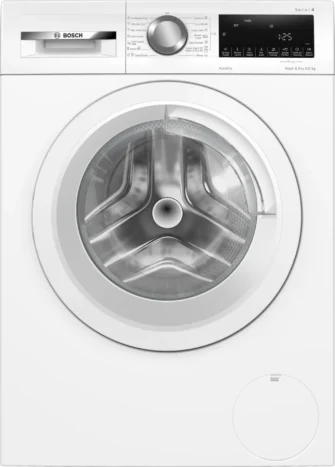
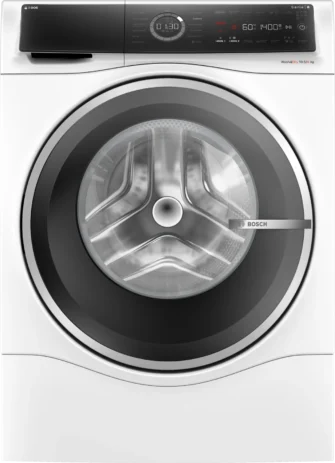
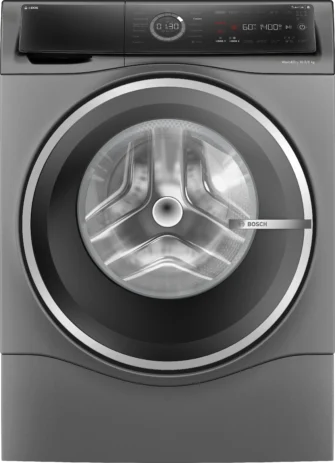
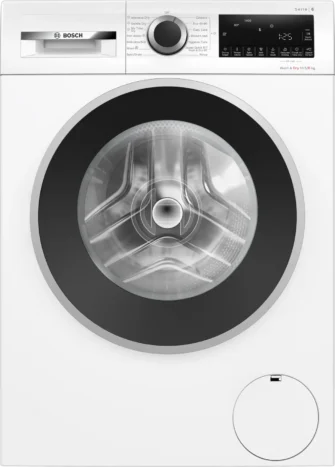
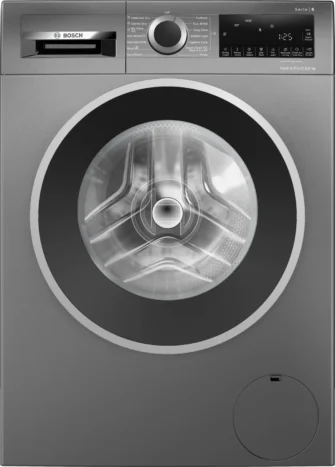
Freestanding Washer Dryers
Freestanding washer dryers combine washing and drying in one appliance, making them a practical choice where there is not enough space for a separate washing machine and tumble dryer. Designed to remain visible rather than sit behind a furniture door, they can be installed in suitable kitchens, utility rooms and laundry spaces.
Compare washing capacity, drying capacity, spin speed, energy performance, dimensions and available convenience features before choosing. Some freestanding washer dryers also offer automatic detergent dosing, steam programmes or app connectivity.
Choosing a Freestanding Washer Dryer
Compare Washing and Drying Capacity
Washer dryers normally have a larger washing capacity than drying capacity. A machine might, for example, wash a 10kg load but dry only 6kg at a time. If you regularly want to wash and dry clothes without removing part of the load between cycles, pay particular attention to the drying capacity rather than choosing solely on the larger washing figure.
Larger-capacity models can be useful for households dealing with bedding, towels and bigger laundry loads, while a smaller appliance may be sufficient where laundry is washed more frequently in smaller batches.
Check the Dimensions Carefully
Freestanding washer dryers are commonly designed around a standard kitchen-appliance width, but their depth can vary considerably. Check the full dimensions of the individual model before ordering and allow sufficient space for hoses, connections, ventilation requirements and door clearance.
Depth is particularly important when positioning a machine beneath a worktop because pipework behind the appliance can reduce the usable installation space.
Understand Washer Dryer Energy Ratings
Washer dryers can display separate energy information for washing alone and for a complete wash-and-dry cycle. If you expect to use the drying function frequently, compare the energy consumption and rating for the combined cycle rather than judging the appliance only by its washing performance.
Drying clothes electrically generally uses substantially more energy than washing alone, so the way you intend to use the machine should influence your comparison.
Consider Spin Speed
A faster final spin can remove more water from suitable fabrics before the drying stage, although the actual spin speed used depends on the selected programme, load and fabric type. Freestanding washer dryers are available with different maximum spin speeds, so compare this alongside capacity and programme choice rather than treating it as the only measure of performance.
Look at Automatic Dosing and Detergent Features
Some premium washer dryers can measure or dispense detergent automatically. For example, selected Miele models use TwinDos automatic detergent dispensing, while selected Bosch models use i-DOS. These systems are intended to reduce manual measuring and adjust detergent use according to the wash.
Other machines use specialised detergent drawers rather than automatic dosing. AEG UniversalDose, for example, is designed to accommodate different detergent formats and help dissolve compatible detergent pods efficiently.
Compare Steam and Refresh Programmes
Steam and refresh functions can be useful for suitable garments that do not require a complete wash. Depending on the appliance, these programmes may help reduce creasing, refresh lightly worn clothes or make ironing easier.
Features differ between manufacturers and models. For example, selected AEG washer dryers use ProSteam, while some Miele machines include SteamCare. Always check what the individual programme actually does rather than assuming that all steam functions work in the same way.
Decide Whether You Need a Smart Washer Dryer
Some freestanding washer dryers connect to a manufacturer's app over Wi-Fi. Depending on the model, this can provide remote status information, programme controls, notifications or additional appliance-management functions.
Examples include Bosch models with Home Connect, Miele machines with Miele@home and compatible Samsung models using SmartThings. Smart functionality varies considerably, so compare the available controls on the individual appliance if connectivity is important to you.
Check Noise Levels
Noise is worth comparing if the washer dryer will be installed in an open-plan kitchen or close to living or sleeping areas. Check the manufacturer's stated noise level and noise class for the individual appliance rather than assuming that machines with similar capacities will perform equally.
Freestanding or Integrated Washer Dryer?
A freestanding washer dryer has a finished exterior and is intended to remain visible after installation. This generally makes installation and replacement simpler because the appliance does not need to accept a matching kitchen furniture door.
An integrated washer dryer is designed to sit behind a cabinet door as part of a fitted kitchen. If that is what your installation requires, browse our integrated washer dryers. You can also compare both installation types in our complete washer dryers range.
Washer Dryer or Separate Washing Machine and Tumble Dryer?
A washer dryer is useful where floor space is limited because one appliance performs both jobs. The trade-off is that its drying capacity is normally lower than its washing capacity, and drying cycles can take longer than using a separate tumble dryer.
If you have enough space and regularly dry large loads, separate appliances may provide greater capacity and flexibility. Compare our freestanding washing machines and tumble dryers if you are considering that option.
Freestanding Washer Dryer FAQs
What is a freestanding washer dryer?
A freestanding washer dryer is a combined washing machine and dryer with its own finished front and sides. Unlike an integrated model, it is not designed to be hidden behind a matching kitchen cabinet door.
Can a washer dryer wash and dry the same size load?
Usually not. The maximum drying capacity is normally lower than the washing capacity. A machine capable of washing a larger load may require some items to be removed before a drying programme is started.
Can a freestanding washer dryer go under a worktop?
Many freestanding washer dryers can be positioned beneath a suitable worktop, provided the installation space meets the manufacturer's dimensional and clearance requirements. Check the complete appliance depth as well as its height and width before ordering.
Do freestanding washer dryers need venting?
Most modern washer dryers do not require an external tumble-dryer vent. They generally use a condensing drying system, but installation requirements differ between models, so follow the manufacturer's instructions for the appliance you choose.
Are smart washer dryers worth considering?
Smart connectivity can be useful if you want appliance notifications, programme information or compatible remote controls through an app. It is not essential to the washing or drying function, so prioritise capacity, installation requirements and core performance first.
What capacity washer dryer should I choose?
Choose according to both the amount of laundry you normally wash and how much you expect to dry in one cycle. Do not compare appliances using washing capacity alone because drying capacity is usually lower.
Related Laundry Categories