

Steam Ovens – Built-In & Combination Steam Ovens
Steam ovens use controlled moisture to cook, reheat and regenerate food, while combination steam ovens add conventional hot-air cooking for baking, roasting and browning. Choose between dedicated steam models and more versatile combi-steam ovens, then compare the installation height, cavity capacity, water supply and cleaning system.
Most built-in steam ovens are approximately 60cm wide, but their height and installation requirements vary considerably. Compact models commonly fit a roughly 45cm-high appliance niche, while full-height ovens provide a larger cavity. Some use a refillable water tank, whereas selected premium models require permanent mains water and drainage.
Choose your steam oven type
- Dedicated steam ovens: designed primarily for steam cooking, reheating, defrosting and other moisture-led cooking methods.
- Combination steam ovens: combine steam with conventional oven heat, making the same appliance suitable for steaming, baking, roasting and browning.
- Compact steam ovens: typically use a shorter installation height and work well in a bank of appliances or alongside a conventional oven.
- Full-height steam ovens: provide a larger conventional-style cavity where the appliance will also be used extensively for baking and roasting.
How to choose a steam oven
Dedicated steam oven or combination steam oven?
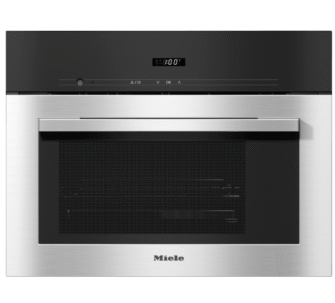
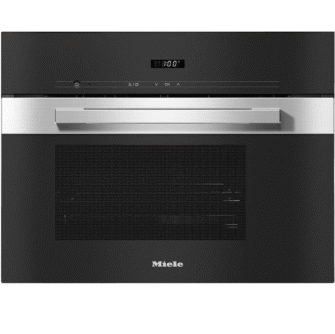
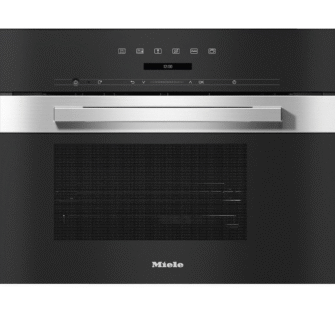
A dedicated steam oven is the more focused choice when steaming, reheating and controlled low-temperature cooking are the priority. The current Miele DG range is a good example: these appliances use steam as their principal cooking method rather than functioning as conventional fan ovens.
A combination steam oven adds dry heat and conventional oven functions. This makes it considerably more flexible when you want one appliance for vegetables, fish and reheating as well as bread, pastry, roasting and browning.
| Type | Steam cooking | Conventional baking and roasting | Typical use |
|---|---|---|---|
| Dedicated steam oven | Yes | Limited or not its primary purpose | Steaming, reheating, vegetables, fish, rice and low-temperature cooking |
| Combination steam oven | Yes | Yes | One appliance for steaming, baking, roasting and combination cooking |
| Oven with added steam | Limited moisture assistance | Yes | Conventional baking and roasting with added moisture |
An oven with an added-steam or moisture-assist function is not necessarily a full steam oven. If you require genuine steam cooking, check that the appliance provides dedicated steam modes rather than simply injecting moisture during selected conventional programmes.
Compact or full-height?
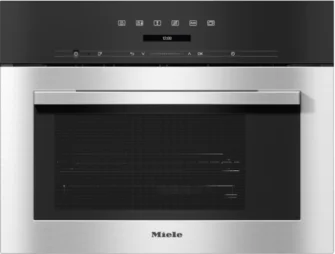
Many steam ovens are approximately 60cm wide but use a compact installation height of around 45cm. This format can be installed alongside a compact microwave, coffee machine or warming drawer, or above a conventional oven.
Full-height models provide more cavity space and can make more sense when a combination steam oven will also perform most everyday baking and roasting duties. Always use the manufacturer's installation drawing rather than assuming that all nominally 60cm ovens use the same cabinet aperture.
Compare cavity capacity
Capacity varies significantly between compact dedicated steam ovens and larger multifunction models. The current Miele DG dedicated steam ovens use 40-litre cavities, while the BORA X BO provides a 53-litre oven chamber. Larger conventional-format steam ovens can provide considerably more space.
Consider shelf positions and tray size as well as litres. A compact oven with several useful shelf positions may suit batch steaming better than a larger cavity with a less convenient layout.
Water tank or mains water connection?
Many steam ovens use a removable or integrated refillable water container, so no permanent water connection is required. This simplifies installation and gives more freedom when positioning the appliance.
Other models are plumbed directly into the water supply and may also require a drain. The BORA X BO uses permanent water inlet and outlet connections, for example, so plumbing must be planned before the kitchen cabinetry is installed.
Check whether the appliance uses a tank, mains water or both, and allow access for filling, draining, descaling and servicing.
Steam percentage and temperature range
Combination steam ovens differ in how much moisture they can introduce. Some provide full steam as well as mixed steam-and-hot-air modes, while others use lower levels of added moisture primarily for bread or roasting.
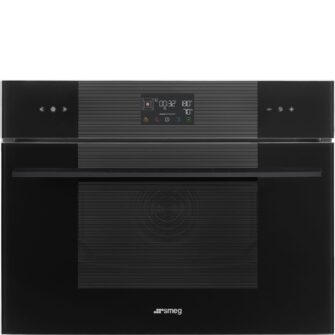
For example, Smeg's current Steam100 system can operate with steam levels from 20% to 100%, allowing both full steam cooking and combination cooking. The correct choice therefore depends on whether you mainly want moisture-assisted conventional cooking or genuine steaming.
Can you cook sous-vide in a steam oven?
Selected steam ovens provide low-temperature programmes suitable for sous-vide cooking. Precise temperature control is important, so do not assume that every appliance with a steam function supports sous-vide. Check the manufacturer's specified programmes for the individual model.
Cleaning and descaling
Steam cooking does not mean that every steam oven has the same cleaning system. Steam generation, cavity cleaning and descaling should be treated as separate specifications.
Some models use a steam or vapour-assisted cleaning cycle, while selected combination ovens offer pyrolytic cleaning. BORA uses an automatic cleaning programme with a cleaning cartridge, while steam-generating components also require appropriate descaling or maintenance according to the manufacturer's instructions.
If the appliance uses a refillable water tank, empty and dry it as instructed after use. In hard-water areas, pay particular attention to the recommended descaling intervals.
Electrical and plumbing requirements
Check the electrical load before finalising the kitchen installation. Requirements vary from compact steam ovens using a conventional dedicated electrical connection to larger combination appliances with substantially higher loads.
Plumbed steam ovens also require careful positioning of the fresh-water connection, waste outlet and ventilation. These services should be planned from the manufacturer's installation drawing rather than added after the cabinetry has been fitted.
Smart steam ovens
Connectivity is available on selected models but should be considered separately from the cooking technology. Connected steam ovens may support remote status information, programme control, software functions or guided cooking, depending on the manufacturer.
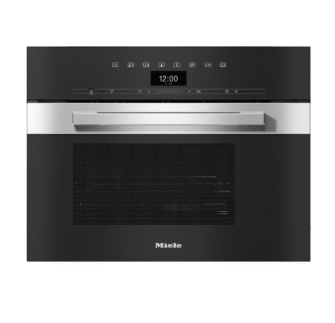
Miele's current DG 7140, DG 7240 and DG 7440 support Miele@home, while BORA X BO supports connected functions through BORA's current platform. A non-connected appliance can still provide the same fundamental steam-cooking methods, so choose smart functionality according to how you intend to use the oven.
Steam oven brands
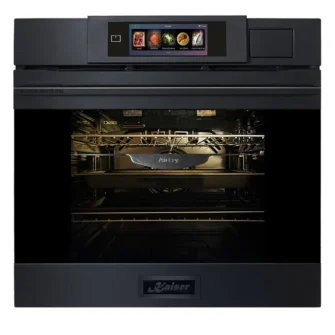
The current range includes dedicated and combination steam ovens from Miele, Smeg, BORA and Kaiser. Compare the complete installation specification as well as the cooking functions, particularly where plumbing or higher electrical loads are required.
For conventional ovens that use steam as an additional cooking feature, browse our wider steam cooking appliances. You can also compare the full range of built-in ovens.
Frequently asked questions
What is the difference between a steam oven and a combination steam oven?
A dedicated steam oven is designed primarily around controlled steam cooking. A combination steam oven can also use conventional dry heat, allowing it to bake, roast and brown food as well as steam it.
Is an oven with added steam the same as a steam oven?
No. An added-steam oven is primarily a conventional oven that introduces moisture during selected programmes. A genuine steam or combination steam oven provides dedicated steam-cooking modes. Check the manufacturer's cooking functions rather than relying solely on the word steam in the product name.
Do steam ovens need plumbing?
Not all of them. Many use a refillable water tank and therefore require no permanent water inlet. Selected premium models require mains water and drainage, so the installation specification should always be checked before cabinetry is ordered.
What size is a built-in steam oven?
Most current models are approximately 60cm wide. Compact steam ovens often use an installation height of around 45cm, while full-height combination models are closer to the dimensions of a conventional built-in single oven.
Can a combination steam oven replace a conventional oven?
Many can, because they provide conventional hot-air cooking as well as steam. Check cavity size, maximum temperature, grill functions and the number of shelf positions if the appliance will be your main oven.
Can you bake bread in a steam oven?
A combination steam oven is particularly suitable because it can use moisture during part of the bake and dry heat for browning and crust development. A dedicated steam-only appliance may not provide the conventional heat needed for the complete baking process.
Do steam ovens need descaling?
Yes, steam-generating systems normally require periodic descaling. The frequency depends on the appliance, water hardness and usage. Follow the manufacturer's maintenance programme rather than applying a universal interval.
Can steam ovens cook sous-vide?
Selected models can maintain the controlled low temperatures required for sous-vide cooking. The feature is not universal, so check that sous-vide is included in the operating modes of the specific oven.



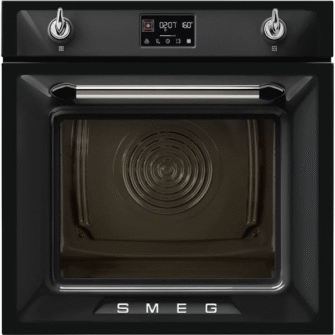
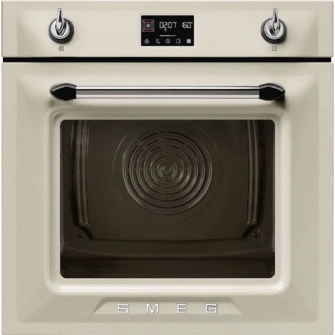
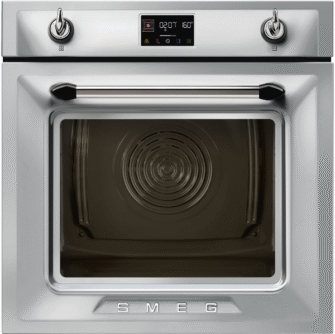


In Built Ovens provide consistent and even heat for reliable cooking results. With precise temperature control and various cooking modes, they offer versatility for baking, roasting, and grilling. Easy to clean and maintain, electric ovens are a practical and efficient choice for any kitchen.

Discover our range of microwaves, including In Built Microwave Ovens and freestanding models, perfect for any kitchen setup. Combination ovens offer the best of both worlds, utilising microwave power for faster cooking while providing traditional oven capabilities. Enhance your cooking efficiency and convenience with our versatile microwave options.

Pyrolytic cleaning ovens make kitchen maintenance effortless by using high heat to turn food residue into ash, which can be easily wiped away. These self-cleaning ovens ensure a spotless interior without the need for harsh chemicals or scrubbing, combining convenience with top-notch cooking performance for a pristine kitchen experience.