

Ceiling Cooker Hoods
Ceiling cooker hoods provide extraction above a hob without the suspended body of a conventional island hood. Choose from flush-built ceiling extractors, surface-mounted ceiling hoods and models designed for either integrated or remote motors, then compare width, airflow, noise, extraction method and installation depth.
Ceiling extraction is often used above kitchen islands and open-plan cooking areas where clear sightlines are important. Before choosing a model, check the ceiling structure, available void depth, position of the hob, ducting route and whether you need external extraction or recirculation.
Choosing a Ceiling Cooker Hood
Start with the installation rather than the appearance. A ceiling extractor may need to fit within a ceiling void or purpose-built bulkhead, while other models mount onto the ceiling surface. The available depth above the finished ceiling can therefore determine which products are suitable before airflow, finish or controls are considered.
| What to compare | What to check | Why it matters |
|---|---|---|
| Installation style | Flush, recessed or surface-mounted ceiling installation | The available ceiling void and finished ceiling construction determine which formats can be fitted. |
| Width | Exact extractor dimensions and the position of the hob below | Ceiling hoods are available in different widths, and the complete dimensions must suit both the cooking zone and ceiling structure. |
| Motor arrangement | Integrated motor, remote motor or motorless extractor unit | Motor location affects installation space, ducting requirements and which additional components may be needed. |
| Extraction method | Ducted, recirculating or convertible | Ducted systems discharge air outside, while recirculating systems require suitable odour filtration before returning air to the kitchen. |
| Airflow | Normal maximum and intensive extraction rates | Manufacturers often quote several airflow figures, so equivalent fan settings should be compared. |
| Noise | Sound power at normal and intensive speeds | Noise varies with fan speed, motor configuration and the installed ducting system. |
| Controls | Remote control, hob-linked control or app connectivity where available | A ceiling-mounted extractor can be difficult to reach directly, making remote or automatic controls particularly useful. |
Flush and Surface-Mounted Ceiling Extractors
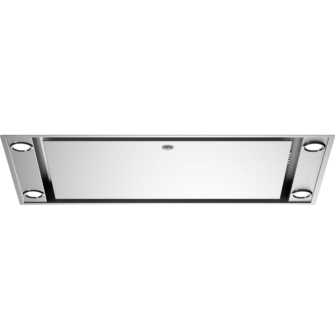
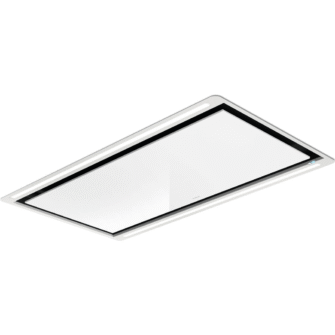
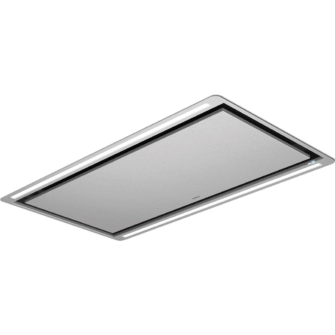
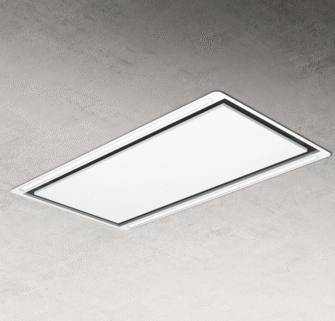
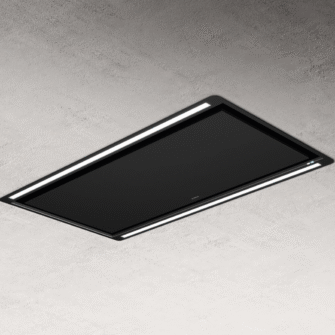
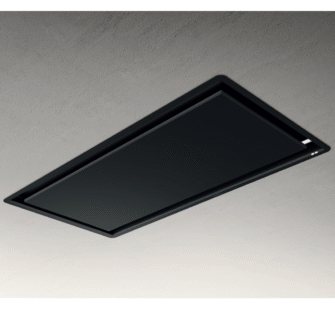
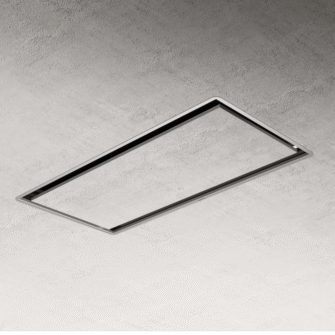
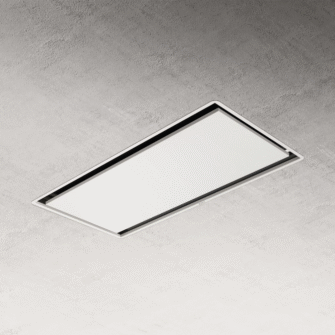
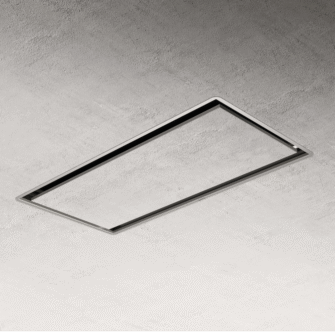
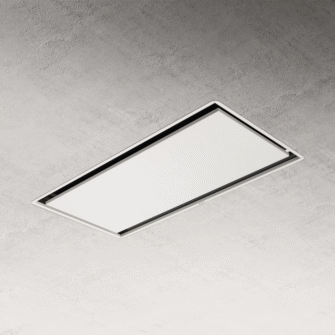
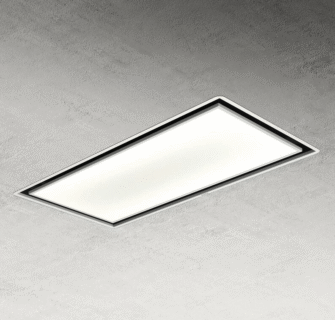
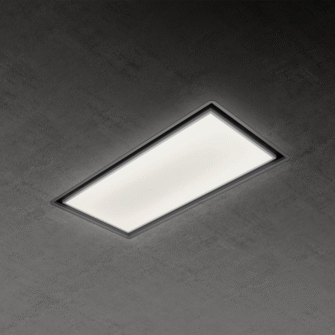
Flush ceiling cooker hoods are designed to sit within the ceiling or a suitable lowered section, leaving the visible extractor panel close to the finished ceiling surface. This provides a discreet installation but makes the available ceiling depth, cut-out dimensions and duct route particularly important.
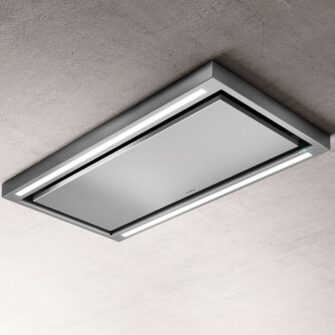
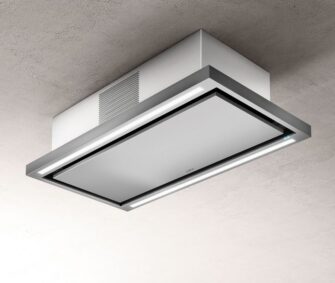
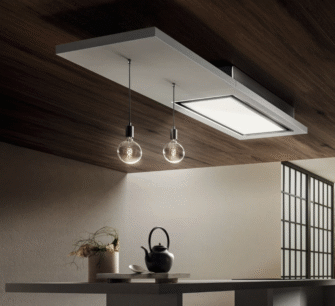
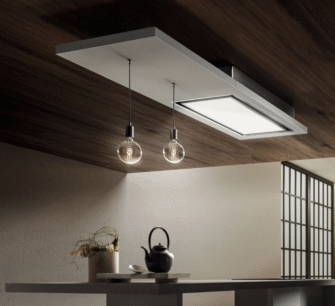
Surface-mounted ceiling hoods attach below the ceiling rather than being fully recessed. They can be useful where the available ceiling void is limited, although the exact fixing requirements and finished height vary between products.
Ducted or Recirculating Ceiling Cooker Hoods
A ducted ceiling extractor carries cooking air outside through suitable ducting. Plan the route before the ceiling is completed and follow the manufacturer's specified duct diameter and installation guidance. Long, restrictive routes and unnecessary bends can affect installed airflow and noise.
Recirculating ceiling hoods filter the extracted air before returning it to the room. These installations normally require compatible charcoal or odour filters and, depending on the model, may need a dedicated recirculation kit. Check what is supplied with the extractor and what must be ordered separately.
Ceiling Depth and Motor Position
Ceiling void depth is one of the most important specifications for this category. Some ceiling extractors use a compact integrated motor, while others are offered with different housing depths or without an internal motor for connection to a compatible remote extraction system.
Do not assume that a motorless ceiling extractor is a complete installation on its own. Confirm the required external motor, control compatibility, ducting and other installation components before ordering.
Extraction Performance and Noise
Airflow is normally stated in cubic metres per hour. Manufacturers may publish separate figures for minimum speed, maximum normal speed and intensive or boost operation, so products should be compared using the same operating condition.
Noise figures need the same treatment. A quoted intensive-speed sound level should not be compared directly with another product's normal maximum figure. Installation also matters: duct diameter, routing and motor location can influence the noise experienced in the kitchen.
Ceiling Cooker Hood Sizes
Current ceiling extractors cover several widths, with 90cm, 100cm and 120cm formats commonly represented. Always use the exact appliance dimensions rather than the nominal width when planning the ceiling cut-out or supporting structure.
The extractor should also be positioned correctly in relation to the hob. Minimum clearances vary by manufacturer and model and can differ between induction, other electric hobs and gas cooking. Follow the installation instructions supplied for both appliances rather than applying one universal mounting height.
Remote and Automatic Controls
Remote controls are particularly useful for ceiling extraction because the appliance is installed above normal reach. Selected models can also communicate with compatible hobs or connect to manufacturer-specific smart systems.
For example, Miele Con@ctivity allows compatible Miele hobs and cooker hoods to communicate so extraction can respond automatically to cooking activity. Other manufacturers offer their own control systems, so compatibility should always be confirmed for the exact hob and extractor combination.
Cleaning and Filter Maintenance
Metal grease filters need regular cleaning to maintain effective airflow. Many current ceiling hoods use washable metal filters, but the manufacturer's cleaning instructions should be followed because construction and recommended maintenance vary.
Recirculating installations also use odour filtration. Depending on the system, the filter may be replaceable or regenerable. Check the exact filter reference, maintenance interval and whether a recirculation kit is required for the model you are considering.
Ceiling Cooker Hood FAQs
What is a ceiling cooker hood?
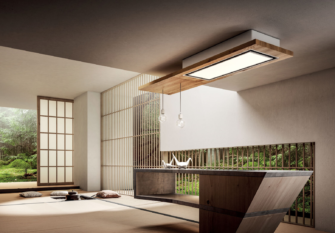
A ceiling cooker hood is an extractor installed into or directly onto the ceiling above a cooking area. Unlike a conventional suspended island hood, a ceiling extractor keeps the main extraction unit close to the ceiling to preserve clearer sightlines across the kitchen.
Is a ceiling cooker hood the same as an island cooker hood?
No. Both can be used above an island, but the product format is different. A ceiling hood is installed into or against the ceiling, while a conventional island cooker hood is suspended down from the ceiling above the hob.
Can ceiling cooker hoods recirculate?
Many can, but not every model supports the same operating modes. Recirculation normally requires compatible charcoal or odour filters and sometimes an additional kit. Check the individual product specification before ordering.
Do ceiling cooker hoods need external motors?
Not necessarily. Many have an integrated motor. Some models can use a remote motor, while certain extractor units are supplied without a motor and must be paired with a compatible external system.
How much ceiling space does a ceiling extractor need?
There is no universal requirement. Housing depth and cut-out dimensions vary considerably between models. Check the complete installation drawing before constructing a ceiling void, bulkhead or supporting frame.
How high should a ceiling cooker hood be above the hob?
Use the minimum and maximum distances specified by the extractor manufacturer and check the hob instructions as well. Required clearance varies between models and can differ for gas and electric or induction cooking.
Are ceiling cooker hoods suitable for kitchen islands?
Yes. Ceiling extractors are commonly used above island cooking areas because they provide overhead extraction without a conventional suspended hood. They can also be used in other layouts where the manufacturer permits the installation.
Are ceiling cooker hoods noisy?
Noise varies significantly between models and fan settings. Compare sound power figures at equivalent speeds and consider the motor position and ducting arrangement as part of the installation rather than relying on a single headline decibel figure.
Related Cooker Hood Categories
Compare all cooker hoods, island cooker hoods, integrated cooker hoods, wall-mounted cooker hoods and angled cooker hoods.


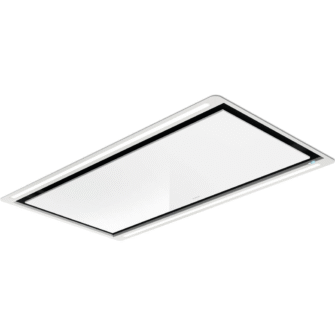
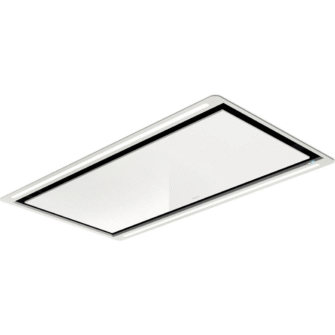
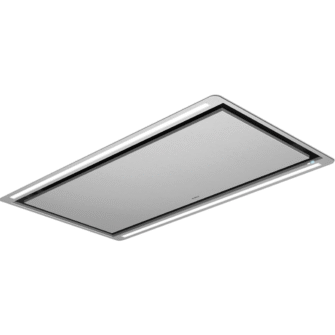
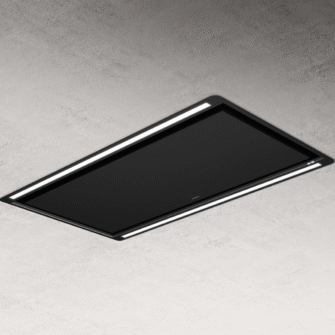



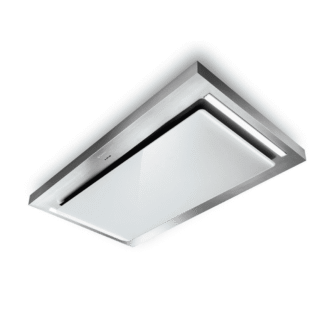
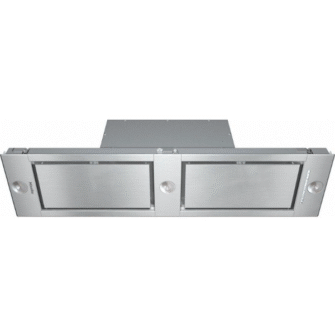




Integrated Cooker Hoods seamlessly blend into your kitchen design, offering powerful extraction without disrupting the aesthetic. They efficiently remove smoke, odours, and grease while operating quietly. Perfect for maintaining a fresh and clean kitchen environment, these hoods are a discreet and stylish solution for modern homes.

Angled Cooker Hoods combine sleek design with effective performance, providing powerful extraction while adding a modern touch to your kitchen. These hoods efficiently remove smoke and odours, offering a clear view of your cooking area. Their stylish and space-saving design makes them an ideal choice for contemporary kitchens.

Island Cooker Hoods are the center-piece of your kitchen, providing powerful extraction and a striking design above your cooking island. They efficiently remove odors and smoke, ensuring a fresh kitchen atmosphere. Available in various styles, these hoods combine functionality with elegance, enhancing both open-plan spaces and modern kitchen designs.