

Island Cooker Hoods & Island Extractor Hoods
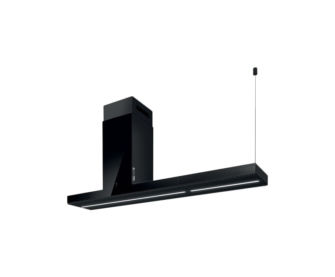
Shop island cooker hoods designed for hobs positioned away from a kitchen wall. Choose from traditional island chimney hoods, slim linear designs and suspended extractor hoods, with ducted and recirculating options across different widths, extraction rates, noise levels and finishes.
Choosing an island cooker hood
An island cooker hood is suspended from the ceiling above a hob installed on a kitchen island or peninsula. Unlike a wall-mounted hood, it does not rely on a wall for support, so the ceiling fixing, suspension height, electrical connection and any duct route all need to be planned before installation.
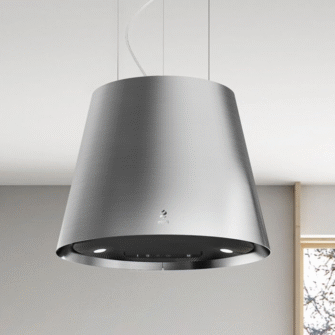
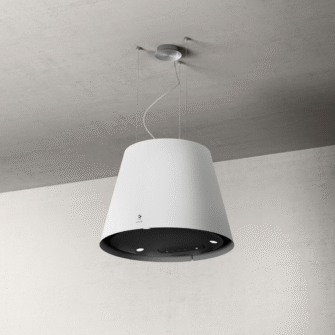
Island extractors are deliberately visible and range from conventional stainless steel chimney designs to compact cylindrical, pendant and shelf-style hoods. The right choice depends on the width of the hob, available ceiling height, whether external ducting is possible and how prominent you want the extractor to be within the room.
Types of island cooker hood
| Type | Installation | Useful for |
|---|---|---|
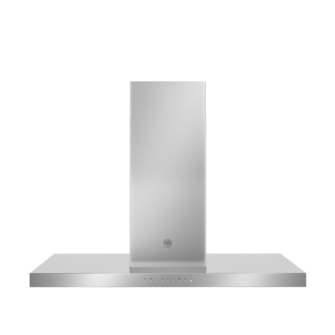
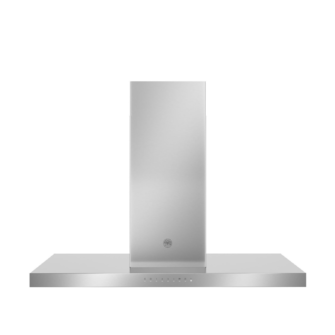
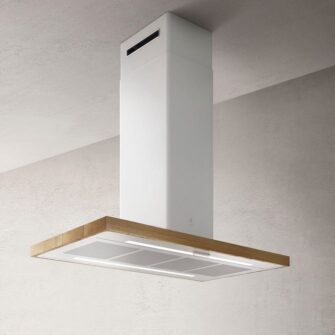
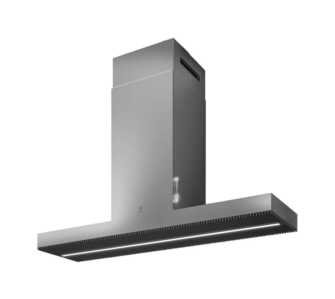
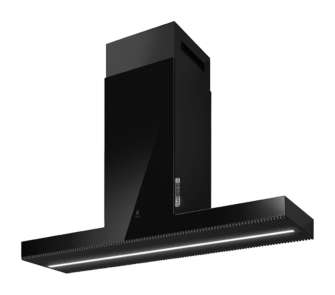
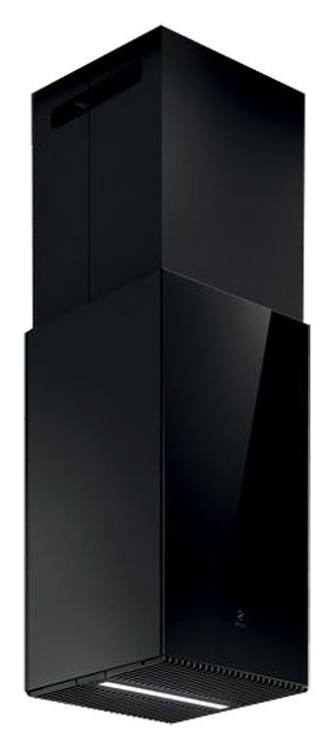
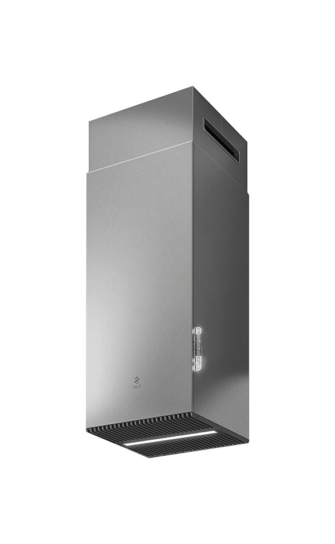
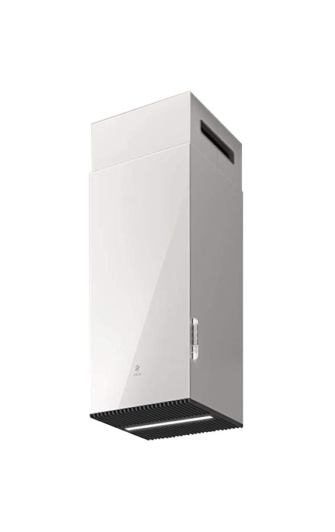
| Island chimney hood | Suspended centrally over the hob with a chimney or ceiling mounting section | Conventional ducted or recirculating extraction with a defined canopy over the cooking area |
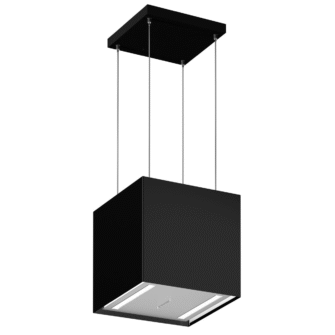
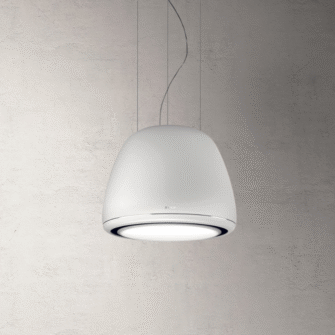
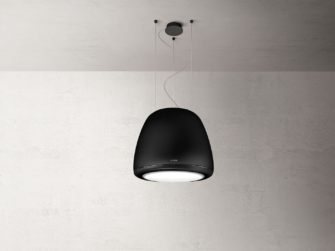
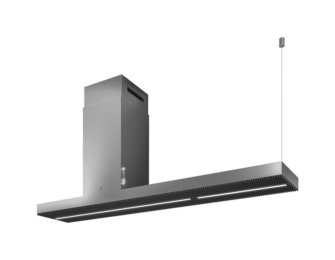
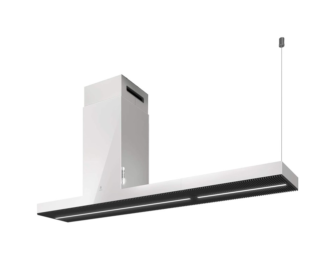
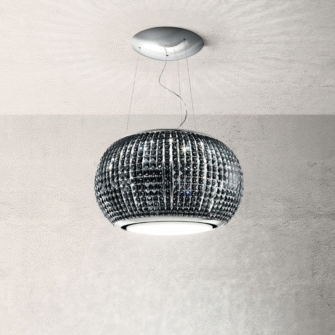
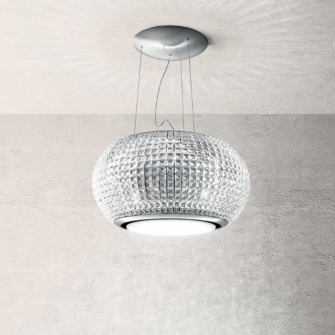
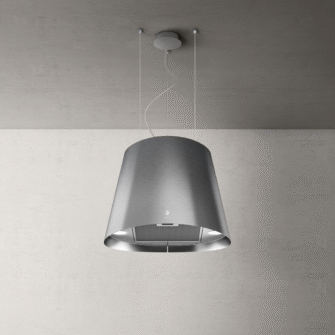
| Suspended island hood | Hangs from the ceiling using a mounting plate, cables or a compact support structure | Open-plan kitchens where the extractor is intended to form part of the room design |
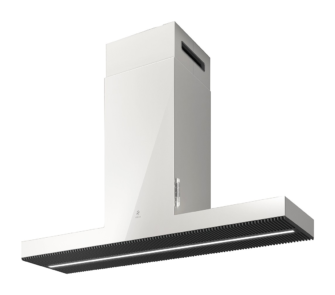
| Island light or shelf hood | Suspended above the island with extraction integrated into a lighting or shelf-style structure | Combining task lighting, visual design and recirculating extraction above a kitchen island |
Island cooker hood or ceiling extractor?
Both can work above a kitchen island, but they are different appliance types. An island cooker hood hangs down above the hob and remains visible. A ceiling extractor is installed into or closely against the ceiling, keeping the space between the hob and ceiling comparatively open.
An island hood can therefore suit kitchens where the extractor is intended to be a design feature, while a ceiling hood is often chosen where maintaining clear sightlines across an open-plan room is the priority.
Choose the right width for your hob
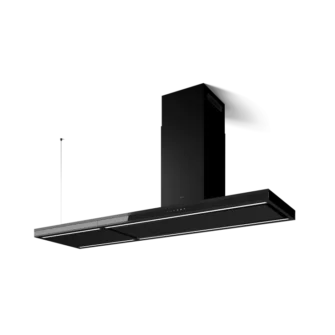
Island cooker hoods are available in a wide range of widths. Common 90cm and 120cm designs suit many island installations, while the current range also includes narrower suspended extractors and considerably wider linear hoods.
Check the manufacturer's guidance for the hob and hood rather than selecting on nominal width alone. Capture performance depends on the relationship between the cooking surface and extractor, as well as the installation height and airflow.
Check the mounting height and ceiling fixing
Every island hood has model-specific installation dimensions. Check the minimum and maximum mounting height, overall suspended height and required clearance above the hob before ordering.
The ceiling must also be suitable for the weight and fixing method of the chosen hood. Suspended and shelf-style extractors can have very different mounting arrangements from conventional chimney designs, so use the technical drawing and installation instructions for the exact model.
Ducted or recirculating island extraction?
Ducted extraction moves cooking air outside through a duct. Where the building layout allows it, check the outlet diameter, route through the ceiling and roof or external wall, and any restrictions on duct length and bends.
Recirculating extraction filters cooking air and returns it to the room. This can simplify installation where an external duct route is impractical and is particularly common on suspended decorative island hoods. Recirculation normally requires an odour or charcoal filter in addition to the grease filter.
Some island cooker hoods support either installation method, while others are designed specifically around recirculation. Always check the exact model rather than assuming both modes are available.
Extraction rate and noise
Airflow is normally quoted in cubic metres per hour (m³/h). Compare the performance available at normal fan speeds as well as any intensive or booster setting, particularly in a large open-plan kitchen where the extractor may be serving a much larger volume of air than in an enclosed room.
Noise is also important because island hoods are commonly installed in open-plan kitchen and living areas. Compare sound levels at ordinary cooking speeds rather than judging a hood only by the figure quoted for its maximum setting.
Lighting and controls
Island hoods often provide useful lighting directly over the cooking surface. Depending on the model, this can range from straightforward LED task lighting to dimmable lighting integrated into suspended or shelf-style designs.
Controls also vary. Some hoods use buttons or touch controls on the appliance, while selected models offer a remote control, app control or communication with compatible cooking appliances. Check compatibility rather than assuming a smart or automatic function will work with any hob.
Filters and maintenance
Grease filters collect airborne grease before it enters the extractor. Many metal filters are reusable and can be cleaned according to the manufacturer's instructions.
Recirculating island hoods also use odour filters. Replacement and maintenance intervals vary considerably: some filters are disposable, while selected long-life filters can be cleaned or regenerated. Confirm the correct filter reference for the exact hood before ordering replacements.
What to check before ordering an island cooker hood
- Hob position: confirm that the appliance is intended for island installation rather than wall or ceiling installation.
- Width: compare hood width with the cooking surface and manufacturer recommendations.
- Mounting height: check the permitted distance between the hob and extractor.
- Ceiling height: make sure the supplied chimney, cables or mounting structure suit the room.
- Ceiling fixing: ensure there is suitable structural support for the appliance.
- Extraction method: choose ducted, recirculating or a model capable of either.
- Duct route: check outlet diameter and the route to the exterior before committing to ducted extraction.
- Extraction rate: compare normal and intensive airflow figures.
- Noise: consider sound levels at the fan settings used for everyday cooking.
- Filters: check grease-filter cleaning and any charcoal or odour-filter requirements.
- Lighting: consider task lighting and adjustable lighting where relevant.
- Controls: check remote, app or hob-to-hood compatibility where these features matter.
Island cooker hood FAQs
What is an island cooker hood?
An island cooker hood is an extractor designed to hang from the ceiling above a hob positioned on a kitchen island or peninsula. It is supported from above rather than attached to a wall.
Does an island cooker hood have to be wider than the hob?
The hood should provide adequate coverage of the cooking area, but the correct relationship between hob width and hood width depends on the manufacturer's instructions. Check the guidance for both appliances before installation.
Can an island cooker hood recirculate?
Yes. Many island hoods can operate in recirculation mode and some suspended designs are specifically intended for recirculation. Compatible odour or charcoal filters may be supplied or may need to be ordered separately.
Do island cooker hoods need external ducting?
Not necessarily. A ducted island hood vents outside, while a recirculating model filters the air and releases it back into the kitchen. Check which modes the exact hood supports.
What is the difference between an island hood and a ceiling hood?
An island hood hangs down into the room above the hob. A ceiling extractor is installed into or close to the ceiling and is designed to keep the area above the island visually open.
Are suspended island cooker hoods effective?
They can provide effective extraction when installed according to the manufacturer's requirements. Performance depends on the individual hood, airflow, installation height, cooking surface and whether the appliance is being used in ducted or recirculating mode.
How high should an island cooker hood be above the hob?
There is no single correct height for every hood. Minimum clearances vary by appliance and can also differ between induction, ceramic and gas hobs. Follow the installation instructions for the exact combination.
Related cooker hood categories
Compare all cooker hoods, ceiling cooker hoods, wall-mounted cooker hoods, angled cooker hoods and integrated cooker hoods.



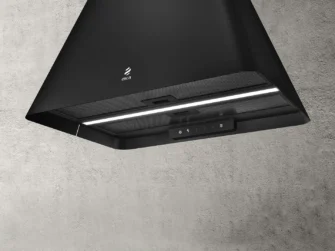
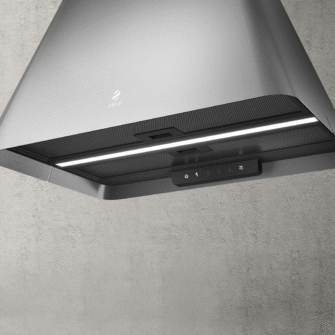
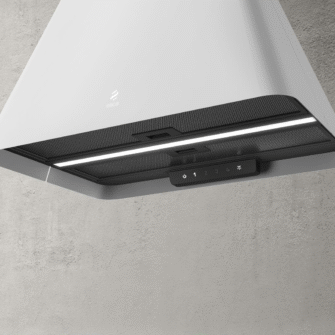
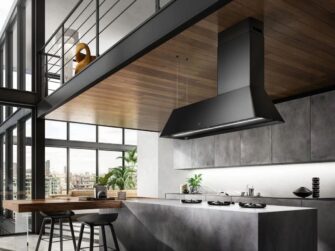

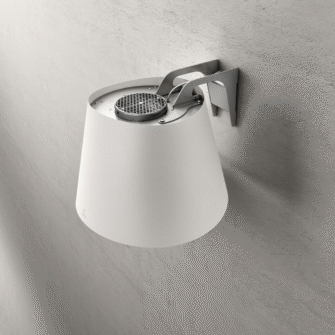
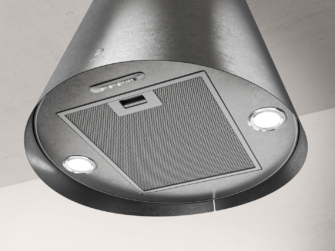
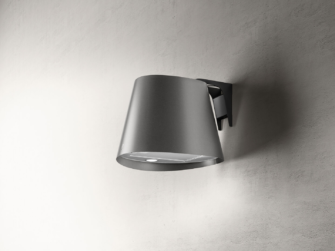


Integrated Cooker Hoods seamlessly blend into your kitchen design, offering powerful extraction without disrupting the aesthetic. They efficiently remove smoke, odours, and grease while operating quietly. Perfect for maintaining a fresh and clean kitchen environment, these hoods are a discreet and stylish solution for modern homes.

Ceiling Cooker Hoods offer a sleek, unobtrusive design that integrates seamlessly with your kitchen ceiling. These hoods provide powerful extraction to effectively clear smoke and odours while maintaining an open and airy kitchen space. Ideal for modern homes, they combine high performance with minimalist aesthetics, enhancing your kitchen’s functionality and style.

Angled Cooker Hoods combine sleek design with effective performance, providing powerful extraction while adding a modern touch to your kitchen. These hoods efficiently remove smoke and odours, offering a clear view of your cooking area. Their stylish and space-saving design makes them an ideal choice for contemporary kitchens.