
Wall Mounted Cooker Hoods & Extractor Hoods
Shop wall mounted cooker hoods for hobs positioned against a kitchen wall. Compare chimney, angled and decorative wall extractor hoods in different widths, finishes and energy classes, with ducted and recirculating options available depending on the model. Check extraction rate, noise, hob clearance and installation dimensions before choosing.
Choosing a wall mounted cooker hood
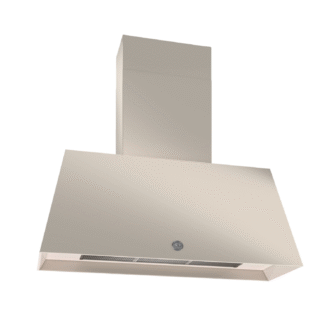
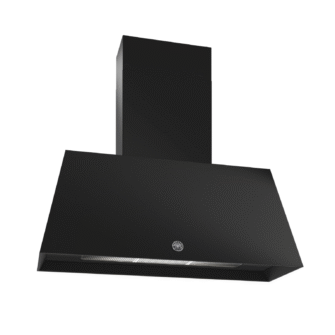
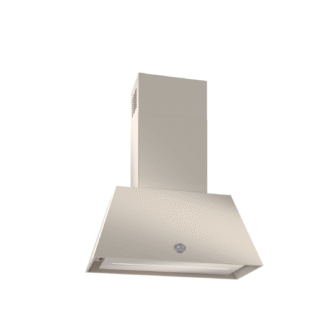
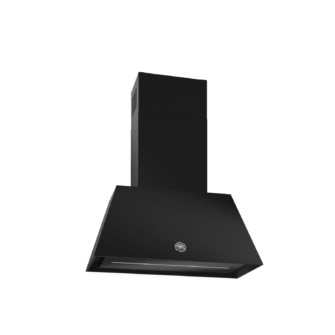
A wall mounted cooker hood is fixed to the wall above a hob and remains visible within the kitchen. Designs range from traditional chimney hoods with a vertical flue cover to angled glass extractors, compact box-style hoods and decorative wall-mounted models.
This type of extractor suits hobs positioned against a wall rather than on a kitchen island. If you want the extractor concealed within a cabinet, an integrated cooker hood is normally the more appropriate installation type.
Types of wall mounted cooker hood
| Type | Design | Useful for |
|---|---|---|
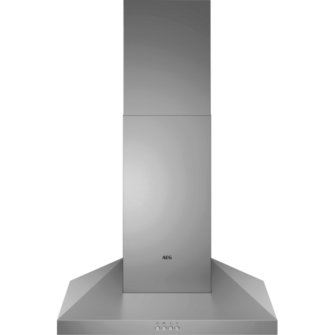
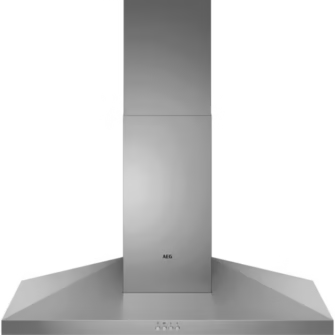
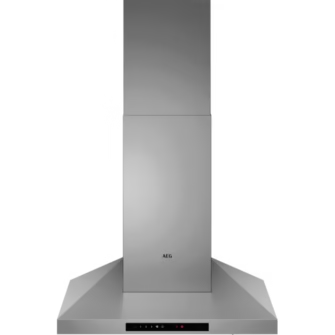
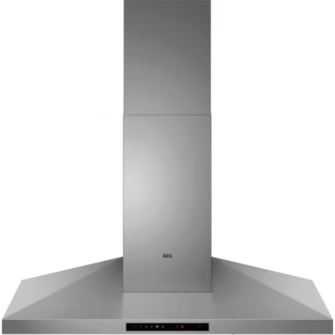
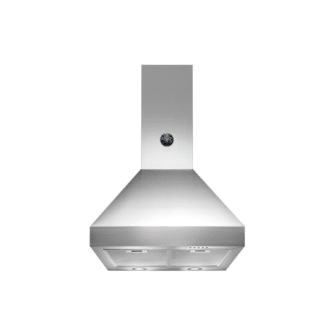
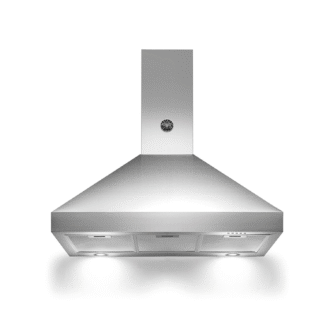
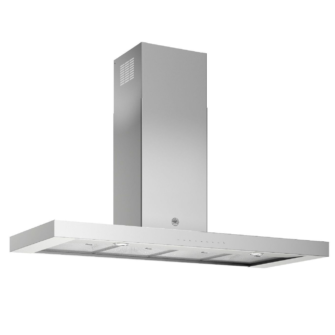
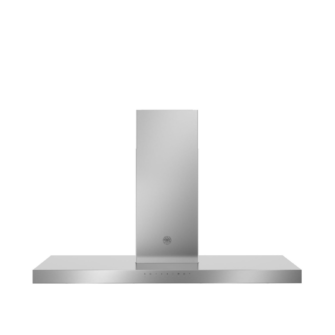
| Chimney cooker hood | A visible canopy with a vertical chimney section above it | Conventional wall installations and a wide choice of widths and finishes |
| Angled cooker hood | A sloping or vertical front panel rather than a horizontal canopy | Keeping more open space around head height while creating a contemporary appearance |
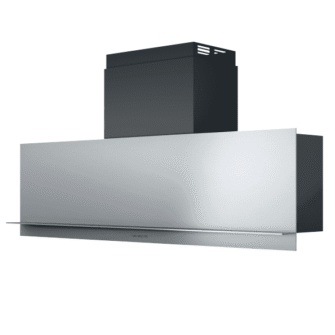
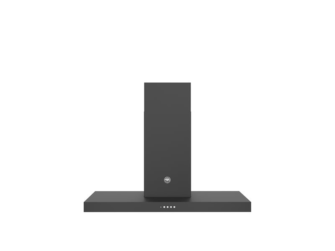
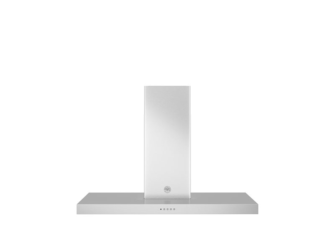
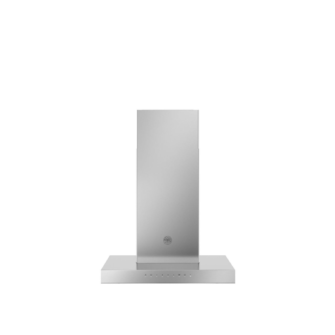
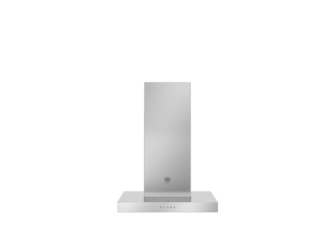
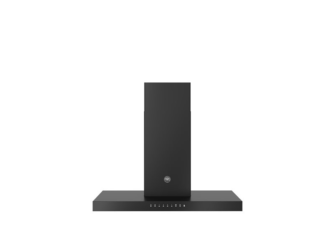
| Box or T-shaped hood | A straight horizontal canopy with a vertical duct cover | Modern kitchens where simple geometric lines are preferred |
| Decorative wall hood | A wall-mounted extractor with a distinctive glass, metal or furniture-style finish | Kitchens where the extractor is intended to remain a visible design feature |
Wall mounted or integrated cooker hood?
A wall mounted cooker hood is fixed directly above a hob and is normally visible. An integrated cooker hood is designed to fit within, beneath or in line with kitchen cabinetry and may be largely concealed.
Do not choose between the two purely by width. Integrated, canopy and telescopic hoods can require specific cabinet apertures and furniture dimensions, while wall-mounted models need suitable wall fixing, clearance above the hob and space for any chimney section or ducting.
Chimney or angled cooker hood?
Both chimney and angled cooker hoods can be wall mounted. A traditional chimney hood usually projects horizontally over the cooking area, while an angled hood uses a sloping or near-vertical front panel.
Angled designs can provide more open space around the front of the hob, while conventional chimney hoods remain a practical choice where a traditional canopy shape is preferred. Extraction performance varies by individual model, so compare airflow and noise rather than assuming one shape will always outperform the other.
Choose the right cooker hood width
Wall mounted cooker hoods are available in several widths, with 60cm and 90cm among the most common sizes. The current range also includes narrower and wider appliances for different hob and kitchen layouts.
Use the manufacturer's installation instructions when matching a hood to your hob. The nominal width is only one consideration: the required capture area, minimum hob clearance and surrounding cabinetry can also affect the correct installation.
Ducted extraction or recirculation?
Many wall mounted cooker hoods can operate using external ducting or recirculation, although the available installation modes are model-specific.
Ducted extraction carries cooking vapour and odours outside through a duct. Check the outlet diameter, duct route and any restrictions on bends or overall duct length before installation.
Recirculation passes the air through grease and odour filters before returning it to the kitchen. This can be useful where external ducting is not practical, but it usually requires a compatible charcoal or long-life odour filter.
Extraction rate and kitchen size
Cooker hood airflow is normally stated in cubic metres per hour (m³/h). Compare extraction rates at normal fan settings as well as any intensive or boost setting.
A larger open-plan kitchen or frequent high-heat cooking may benefit from greater extraction capacity, but airflow should not be considered in isolation. Duct design, installation height, capture area and the way the hood is used all affect real-world performance.
Compare cooker hood noise levels
Noise is especially important in open-plan kitchens. Published sound levels usually vary substantially between the lowest, normal and intensive fan settings, so compare like-for-like figures rather than simply looking for the lowest number on a specification sheet.
Quieter everyday operation can be more useful than a low figure achieved only at the minimum fan speed. Also consider whether the hood offers an intensive setting for short periods of heavy cooking.
Installation height and wall fixing
Wall mounted cooker hoods have model-specific minimum clearances above the cooking surface. These can differ between electric, induction and gas hobs.
Check the manufacturer's installation drawing for the exact hood before fitting. It should confirm minimum hob clearance, appliance dimensions, fixing positions, chimney height range and duct outlet location.
The wall must also be suitable for the weight and fixing method of the appliance. Do not rely on the decorative chimney section to support the hood.
Filters and maintenance
Grease filters trap airborne grease before it enters the extractor. Many wall mounted hoods use washable metal grease filters that can be removed for cleaning according to the manufacturer's instructions.
If the hood is installed for recirculation, an additional charcoal or odour filter is normally required. Filter life and maintenance vary between products: some filters are replaced periodically, while selected long-life versions can be cleaned or regenerated.
Automatic controls and connected cooker hoods
Selected wall mounted cooker hoods can communicate with a compatible hob and automatically change fan speed as cooking conditions change. Some connected models also provide app operation, filter notifications or other remote functions.
These features are manufacturer and model specific. A hood with hob-to-hood communication is not necessarily the same as a Wi-Fi-connected appliance, so check exactly what the stated smart function does and which hobs are compatible.
What to check before ordering
- Installation type: confirm that the hood is designed for wall mounting rather than integrated, island or ceiling installation.
- Width: match the extractor appropriately to the hob and available wall space.
- Hob clearance: follow the minimum distances specified for the exact hood and hob type.
- Overall height: check the chimney adjustment range against the ceiling height.
- Ducting: confirm outlet diameter, direction and the route to the exterior.
- Extraction mode: check whether the hood supports ducting, recirculation or both.
- Extraction rate: compare normal and intensive airflow figures.
- Noise: compare sound levels at realistic everyday fan speeds.
- Filters: check how grease filters are cleaned and which odour filter is required for recirculation.
- Controls: consider automatic hob control, app connectivity and filter indicators where useful.
- Lighting: compare the type and position of task lighting over the hob.
Wall mounted cooker hood FAQs
What is a wall mounted cooker hood?
A wall mounted cooker hood is an extractor fixed to the wall above a hob. It normally remains visible and can take the form of a chimney, angled, box-style or decorative extractor.
Is a chimney cooker hood wall mounted?
Usually, yes. A chimney cooker hood typically consists of a canopy mounted above a wall-positioned hob with a vertical chimney section covering the ducting or recirculation components.
Are angled cooker hoods wall mounted?
Most angled cooker hoods are wall mounted. They use a sloping or near-vertical front panel instead of the projecting horizontal canopy found on many traditional chimney hoods.
Can a wall mounted cooker hood recirculate?
Many can, although compatibility varies by model. Recirculation normally requires a charcoal or odour filter and may require an additional conversion component.
Does a wall mounted cooker hood need an outside vent?
Not if the chosen model supports recirculation. Ducted extraction vents air outside, while recirculation filters the air and returns it to the room.
What size wall mounted cooker hood do I need?
Choose a size appropriate for the hob and installation space, then check the manufacturer's fitting instructions. Hood width, hob width, installation height and capture area all need to be considered together.
How high should a wall mounted cooker hood be above a hob?
The required clearance depends on the exact hood and hob. Gas installations can require a different minimum distance from electric or induction hobs, so always use the manufacturer's installation instructions rather than a generic measurement.
What is the difference between a wall mounted and integrated cooker hood?
A wall mounted hood is attached to the wall and normally remains visible. An integrated hood is designed to fit within or beneath kitchen furniture and is usually chosen where a more concealed installation is required.
Related cooker hood categories
Compare all cooker hoods, angled cooker hoods, integrated cooker hoods, island cooker hoods and ceiling cooker hoods.







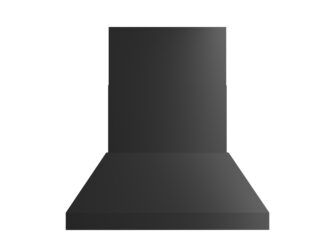
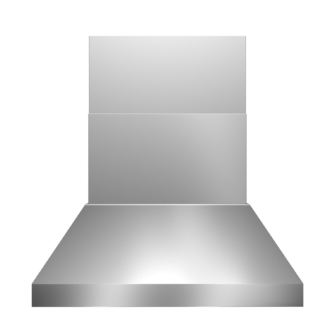
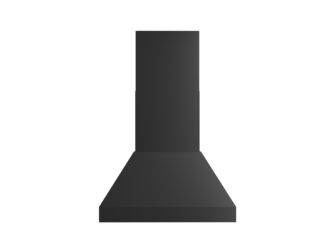
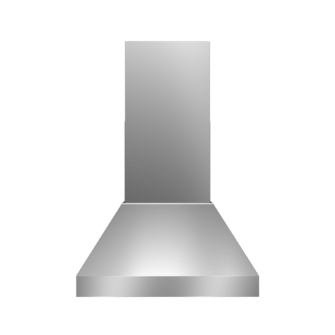


Island Extractor Fans are the center-piece of your kitchen, providing powerful extraction and a striking design above your cooking island. They efficiently remove odours and smoke, ensuring a fresh kitchen atmosphere. Available in various styles, these hoods combine functionality with elegance, enhancing both open-plan spaces and modern kitchen designs.

Hidden Built In Cooker Hoods seamlessly blend into your kitchen design, offering powerful extraction without disrupting the aesthetic. They efficiently remove smoke, odours, and grease while operating quietly. Perfect for maintaining a fresh and clean kitchen environment, these hoods are a discreet and stylish solution for modern homes.

Canopy Cooker Hoods offer a sleek, unobtrusive design that integrates seamlessly with your kitchen ceiling. These hoods provide powerful extraction to effectively clear smoke and odours while maintaining an open and airy kitchen space. Ideal for modern homes, they combine high performance with minimalist aesthetics, enhancing your kitchen’s functionality and style.