
Miele Washer Dryer vs Separate Appliances
Should you choose a Miele washer-dryer or buy a separate washing machine and tumble dryer? A combined washer-dryer saves space by washing and drying in one appliance, while separate machines offer greater drying capacity and allow you to wash one load while another is drying.
Our current Miele washer-dryers provide 8kg washing and 5kg drying capacities. Separate Miele washing machines offer 8kg, 9kg and 10kg capacities, while the available heat-pump tumble dryers provide 8kg or 9kg drying capacity. This guide compares the differences in running costs, programme times, installation requirements and everyday convenience to help you choose the right laundry setup.
Miele Washer Dryer vs Separate Machines: Key Differences
| Feature | Miele Washer Dryer | Separate Washing Machine and Tumble Dryer |
|---|---|---|
| Number of Appliances | One combined appliance | Two dedicated appliances |
| Installation Space | One appliance footprint | Side by side or stacked where compatible |
| Washing Capacity | 8kg on current Miele models | 8kg to 10kg in the current selection |
| Drying Capacity | 5kg on current Miele models | 8kg or 9kg in the current selection |
| Wash and Dry Together | Yes, within the drying-load limit | Requires transferring laundry between appliances |
| Simultaneous Operation | Cannot wash and dry separate loads at the same time | Can wash one load while drying another |
| Drying Technology | Integrated condenser drying on current WT1 models | Heat-pump drying on current Miele tumble dryers |
| Purchase Cost | One appliance to purchase | Two appliances and potentially a stacking kit |
| Best Suited To | Limited space and smaller drying loads | Frequent laundry and larger drying loads |
The main compromise with a combined washer-dryer is its smaller drying capacity. A Miele WT1 can wash an 8kg load, but it cannot dry all 8kg in one drying cycle. By contrast, a separate 9kg washing machine paired with a suitable 9kg tumble dryer can accommodate larger matched loads.
Compare Current Miele Laundry Appliances
These models illustrate the available options. The washer-dryers combine both functions within one machine, while the washing machine and tumble dryer can be purchased separately to create a dedicated laundry setup.
| Model | Appliance Type | Washing Capacity | Drying Capacity |
|---|---|---|---|
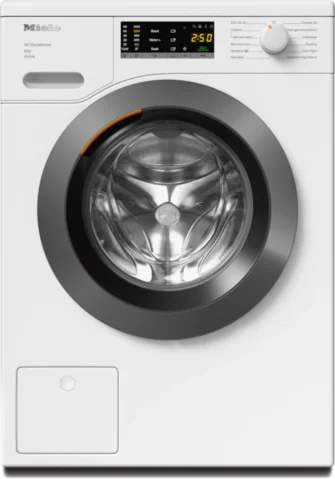
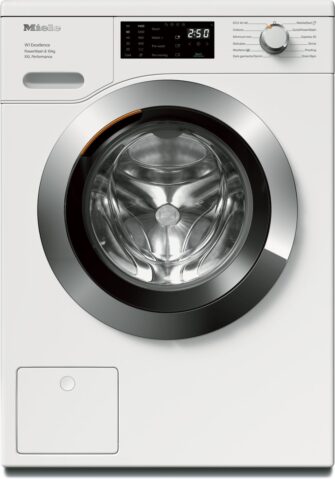
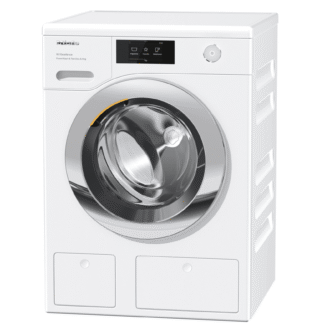
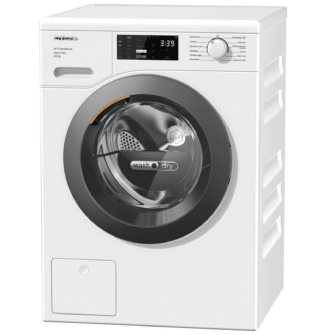
| Miele WTD165 WPM | Washer Dryer | 8kg | 5kg |
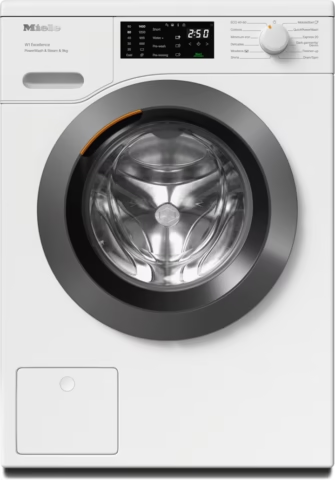
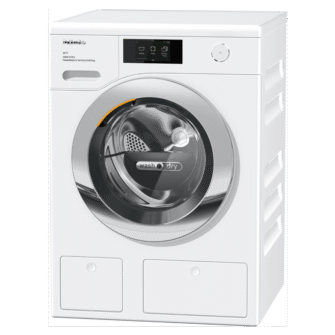
| Miele WTR860 WPM | Washer Dryer | 8kg | 5kg |
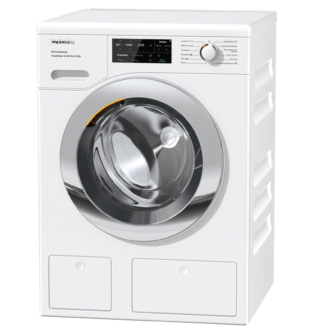
| Miele WED385 WCS | Washing Machine | 9kg | Not applicable |
| Miele TED645 WP | Heat-Pump Tumble Dryer | Not applicable | 9kg |
The WTD165 offers straightforward combined washing and drying, while the WTR860 adds features such as TwinDos automatic detergent dispensing, PowerWash and SteamCare. For separate appliances, a 9kg washing machine such as the WED385 can be paired with a compatible 9kg heat-pump dryer such as the TED645.
Washing and Drying Capacity: Why the Difference Matters
Capacity is one of the most important differences between a combined washer-dryer and separate appliances. The current Miele WTD165 and WTR860 washer-dryers can wash up to 8kg of suitable laundry, but their maximum drying capacity is 5kg.
If you wash an 8kg load and want to tumble dry everything, some items must be removed before drying begins. Alternatively, you can wash and dry a smaller load of up to 5kg continuously, subject to the selected programme's limits.
Separate Miele washing machines and tumble dryers offer a different balance. A 9kg washing machine paired with a 9kg tumble dryer can accommodate larger laundry loads, although individual programmes may impose lower capacity limits.
This makes separate appliances particularly useful for households regularly washing towels, bedding, school uniforms or several loads of everyday clothing.
Which Is Faster: A Washer Dryer or Separate Machines?
A combined washer-dryer can be convenient because suitable laundry can be washed and dried without transferring it between appliances. However, washing and drying take place consecutively within the same machine.
For example, Miele specifies a complete wash-and-dry programme duration of 389 minutes at nominal capacity for the WTD165. Shorter programmes are available for suitable smaller loads, but programme times vary depending on the selected settings and fabric requirements.
With separate appliances, washing and drying also take time, but the machines can operate simultaneously. While one load is drying, another can be washed, allowing several loads to be processed more efficiently.
If you usually wash and dry one smaller load at a time, the convenience of an uninterrupted washer-dryer cycle may be more valuable than maximum laundry throughput.
Are Separate Miele Washing Machines and Dryers Cheaper to Run?
Running costs depend on the individual appliances, the programmes selected, load sizes and electricity prices. However, Miele's separate heat-pump tumble dryers use a different drying system from its current WT1 washer-dryers.
Heat-pump tumble dryers reuse heat during the drying process to reduce energy consumption compared with conventional condenser drying. This can make a separate heat-pump dryer attractive for households that regularly machine-dry substantial amounts of laundry.
Current Miele washer-dryers use condenser drying within the combined appliance. Their energy labels provide separate figures for washing-only operation and the complete washing-and-drying cycle.
Understanding Washer-Dryer Energy Labels
For example, the Miele WTD165 has an A energy efficiency rating for washing alone and a D rating for the complete wash-and-dry cycle under the current A to G classification. Miele specifies 47kWh per 100 washing-only cycles and 266kWh per 100 complete wash-and-dry cycles under the relevant test conditions.
These figures are not directly equivalent because they measure different operations. Similarly, energy labels for dedicated tumble dryers may use a different rating scale from combined washer-dryers, so the letter grades should not be compared in isolation.
To estimate running costs, compare the published electricity consumption for equivalent quantities of washing and drying, then multiply the electricity used in kilowatt-hours by your electricity tariff. Account for any differences in the permitted load size and programme settings.
A separate heat-pump dryer may provide lower drying costs over time, particularly with frequent use, but this should be assessed against the additional purchase cost of buying two appliances.
Installation: One Appliance or Two?
A combined Miele washer-dryer is often the simpler choice where there is only enough floor space for one laundry appliance. The WTD165 and WTR860 have a conventional freestanding format, with water supply, waste drainage and electrical connections required.
For example, the WTD165 measures 850mm high, 596mm wide and 637mm deep. Additional space is required for hoses, door opening and installation clearances.
Separate Miele washing machines and tumble dryers can be installed alongside one another where sufficient floor space is available. Alternatively, compatible appliances can be stacked to reduce the overall floor space required.
Can You Stack a Miele Washing Machine and Tumble Dryer?
Yes. Selected Miele washing machines and tumble dryers can be installed in a stacked arrangement using an approved Miele stacking kit. The tumble dryer is positioned above the washing machine, and the correct kit secures the appliances according to the manufacturer's installation requirements.
Stacking can make separate washing and drying practical in a utility room or laundry cupboard where two appliances cannot fit side by side.
However, stacking increases the overall height and requires sufficient clearance, ventilation and access to both appliances. Compatibility depends on the exact models, and some stacking kits include additional features such as a pull-out shelf.
Always confirm appliance compatibility and the correct stacking kit before ordering. A stacked installation must follow the manufacturer's instructions.
Washer Dryer vs Separate Appliances for Families
For households that generate large amounts of laundry, separate appliances generally offer more flexibility. A dedicated washing machine and tumble dryer can handle larger individual loads and operate at the same time.
For example, a family using a 9kg washing machine and a 9kg dryer can wash one suitable load while another dries. This may be particularly useful when several loads need to be completed in one day.
A combined washer-dryer may still suit a family where drying needs are occasional or where much of the washing is air-dried. Its smaller 5kg drying limit becomes most noticeable when full washing loads also need machine drying.
Is a Miele Washer Dryer Worth Buying?
A Miele washer-dryer can be a sensible purchase when installation space is the main constraint. It provides washing and drying within one appliance, and smaller compatible loads can complete both stages without being transferred between machines.
The current WT1 models also include Miele fabric-care technologies, with the WTR860 offering TwinDos automatic detergent dispensing, PowerWash and SteamCare.
However, the convenience of one appliance must be balanced against its smaller drying capacity and the inability to process separate washing and drying loads simultaneously.
If you have enough installation space and machine-dry laundry frequently, separate Miele appliances may be the more practical long-term choice.
Which Miele Laundry Setup Should You Choose?
Choose a Miele Washer Dryer If...
- You only have space for one washing or drying appliance.
- You usually machine-dry smaller loads.
- You value washing and drying suitable laundry without transferring it between machines.
- You prefer to purchase and install one appliance rather than two.
- You are considering the WTD165 or WTR860 WT1 washer-dryers.
Explore the Miele WTD165 or the more advanced WTR860 to compare available features and specifications.
Choose Separate Miele Appliances If...
- You regularly wash and dry large loads of laundry.
- You want greater dedicated drying capacity.
- You would benefit from washing and drying different loads at the same time.
- You want a dedicated heat-pump tumble dryer.
- You have space for two appliances side by side or can install compatible models in a stacked arrangement.
Browse our Miele washing machines and Miele tumble dryers to create a separate laundry setup.
Miele Washer Dryer vs Separate Appliances FAQs
Is it better to buy a washer-dryer or separate machines?
A washer-dryer is generally more convenient where space is limited, while separate machines provide greater drying capacity and allow washing and drying to happen simultaneously. The best choice depends on the amount of laundry you process and the available installation space.
Can a Miele washer-dryer wash and dry an 8kg load?
Current Miele WT1 washer-dryers can wash up to 8kg but dry up to 5kg. A full 8kg washing load cannot therefore be dried continuously in one cycle without removing some laundry before drying.
Are Miele washer-dryers heat-pump appliances?
The current Miele WT1 washer-dryers in our selection use condenser drying rather than the dedicated heat-pump technology found in Miele T1 tumble dryers. Check the exact appliance specification when comparing drying systems.
Can separate Miele washing machines and tumble dryers be stacked?
Compatible Miele washing machines and tumble dryers can be stacked using an approved Miele stacking kit. The correct kit and installation requirements depend on the appliance models.
Do separate washing machines and tumble dryers use less electricity?
Separate heat-pump tumble dryers can use less electricity for drying than conventional condenser systems, but total running costs depend on the specific appliances, programme settings and load sizes. Compare published electricity consumption under equivalent conditions rather than relying only on energy-rating letters.
Can I use a Miele washer-dryer for washing only?
Yes. A Miele washer-dryer can run washing-only programmes without using the drying function. The current WT1 models provide up to 8kg washing capacity on suitable programmes.
Can I use a Miele washer-dryer for drying only?
Yes. Suitable laundry can be dried without running a washing programme first. The current WT1 models provide up to 5kg drying capacity on compatible programmes.
Explore More Miele Laundry Guides
Explore our Miele Laundry hub, compare the available Miele washing machines and tumble dryers, or visit our Best Miele Washing Machines guide for individual model recommendations.