

Freezers
Shop freezers for dedicated frozen-food storage, including integrated, freestanding, upright and built-under models. Compare dimensions, usable capacity, frost-management system, energy rating, noise level and installation requirements to find a freezer that fits your kitchen and storage needs.
Choose Your Freezer
- Integrated freezers fit inside kitchen cabinetry behind a furniture door. Check the required niche dimensions and whether the appliance uses a fixed or sliding furniture-door fitting.
- Freestanding freezers have a finished exterior and offer greater flexibility over position, capacity and finish.
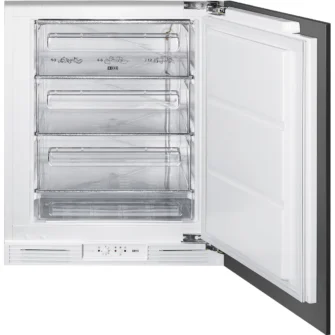
- Built-under freezers fit beneath a worktop and are useful where floor space is limited or less frozen-food capacity is required.
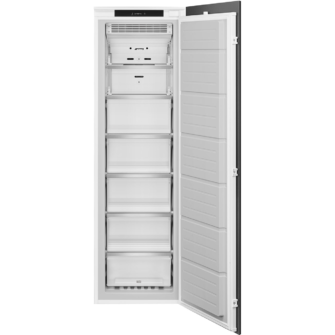
- Tall upright freezers maximise storage vertically and are useful for larger households, bulk buying and batch cooking.
- Frost-free freezers use an automatic system to prevent significant ice build-up, avoiding routine manual defrosting.
How to Choose a Freezer
Integrated or Freestanding?
| Type | Installation | Important checks |
|---|---|---|
| Integrated freezer | Installed inside kitchen cabinetry behind a furniture door | Niche dimensions, ventilation, furniture-door hinge system and door-front requirements |
| Freestanding freezer | Installed independently with a finished exterior | Overall dimensions, ventilation, door clearance and hinge direction |
| Built-under freezer | Installed beneath a worktop | Installation height, width, ventilation and furniture-door fitting where integrated |
| Tall upright freezer | Full-height vertical storage | Capacity, floor space, door clearance and delivery access |
Check the Dimensions Carefully
Measure height, width and depth before ordering. For a freestanding freezer, use the overall appliance dimensions and allow the ventilation and door-opening clearances specified by the manufacturer.
For an integrated freezer, check the required cabinet niche dimensions rather than relying only on the appliance dimensions. Built-under and tall integrated models are designed for different cabinet heights and are not interchangeable.
Choose the Right Capacity
Freezer capacity is stated in litres. A compact built-under freezer may be suitable for supplementary frozen-food storage, while a tall upright freezer provides considerably more room for larger households, bulk purchases and batch-cooked meals.
Look at the internal layout as well as total litres. The number and size of drawers, removable shelves and flexible storage sections affect how easily larger items can be accommodated.
Frost Free, Low Frost and Manual Defrost
Freezers use different approaches to frost control. Frost Free or NoFrost systems automatically manage ice build-up so routine manual defrosting is not normally required.
Reduced-frost systems such as Liebherr SmartFrost and Miele ComfortFrost limit ice formation but can still require occasional manual defrosting. Conventional static freezers also require manual defrosting when ice accumulates.
These systems should be treated as separate specifications rather than grouped together under a single frost-free label.
Integrated Freezer Hinge Systems
Integrated freezers can use fixed or sliding furniture-door systems. With a fixed or door-on-door fitting, the kitchen furniture front is attached directly to the appliance door. With a sliding system, the furniture door and freezer door have separate hinges connected by sliding rails.
When replacing an existing integrated freezer, identify the current installation system and cabinet dimensions before ordering.
Door Opening and Clearance
Check whether the door is left-hinged, right-hinged or reversible. Even where the hinge can be changed, sufficient clearance is needed for the door to open far enough to remove drawers and access the full freezer compartment.
Fast Freezing
Many freezers provide a rapid-freeze or SuperFreeze function that temporarily lowers the freezer temperature when fresh food is added. This helps bring newly added groceries down to storage temperature more quickly and reduces their effect on food already frozen.
Flexible Storage
Some upright freezers allow drawers or shelves to be removed to create additional space for bulky frozen items. Manufacturers use names such as Miele VarioRoom and Liebherr VarioSpace for this type of flexible storage arrangement.
Ice Makers
Selected premium integrated freezers include automatic ice makers. Check whether the appliance requires a mains-water connection before ordering and allow for any required plumbing, filters and installation clearance.
An ice-maker specification should not be confused with a combined ice-and-water dispenser: dedicated freezers normally provide ice rather than chilled drinking water.
Energy Consumption
Compare the A–G energy class and stated annual electricity consumption between freezers of a similar size. Capacity matters when making comparisons because a tall high-capacity freezer naturally has different energy requirements from a compact built-under model.
Noise Level
Check the manufacturer's published airborne noise emission in dB if the freezer will be installed in an open-plan kitchen or near living space. Lower figures can be useful when comparing otherwise similar appliances.
Understanding Freezer Technology
NoFrost
NoFrost or Frost Free systems control moisture and ice build-up so regular manual defrosting is not required. Bosch, AEG, Siemens, Miele, Smeg and Liebherr all offer this type of technology on selected freezers, although the exact system varies by manufacturer and model.
SmartFrost and ComfortFrost
Reduced-frost systems are different from NoFrost. Liebherr SmartFrost significantly reduces frost formation and the frequency of manual defrosting, while selected Miele freezers use ComfortFrost to reduce how often defrosting is required.
If avoiding manual defrosting is a priority, check for an explicit NoFrost or Frost Free specification rather than assuming all reduced-frost systems are equivalent.
Smart Connectivity
Selected freezers can connect to a manufacturer's app for functions such as temperature monitoring, alerts, settings or software updates. Smart features vary significantly by model, so check the individual product specification rather than treating connectivity as standard across a brand.
Freezer Installation Checklist
- Measure the available height, width and depth.
- For integrated appliances, confirm the required cabinet niche dimensions.
- Check whether an integrated model uses a fixed or sliding furniture-door system.
- Confirm the door-opening direction and whether it is reversible.
- Allow the ventilation clearances specified by the manufacturer.
- Check that drawers can be removed with the door open in the intended position.
- Compare usable freezer capacity in litres.
- Check whether the model is NoFrost, reduced-frost or manually defrosted.
- For an automatic ice maker, confirm whether a mains-water connection is required.
Frequently Asked Questions
What is the difference between an integrated and freestanding freezer?
An integrated freezer is installed inside kitchen cabinetry and concealed behind a furniture door. A freestanding freezer has its own finished exterior and is installed independently, subject to the manufacturer's ventilation and clearance requirements.
What is a frost-free freezer?
A frost-free or NoFrost freezer automatically controls ice build-up, so routine manual defrosting is not normally necessary.
Is SmartFrost the same as NoFrost?
No. SmartFrost reduces frost build-up and means the freezer needs defrosting less frequently. NoFrost is designed to prevent significant ice formation automatically so regular manual defrosting is not required.
Do all freezers need defrosting?
No. Genuine NoFrost or Frost Free models normally do not require routine manual defrosting. Reduced-frost and conventional static freezers can still need occasional manual defrosting.
What should I measure before buying an integrated freezer?
Measure the cabinet niche height, width and depth and check the manufacturer's ventilation requirements. You should also confirm the furniture-door fitting and any stated maximum furniture-front weight.
What freezer capacity do I need?
Capacity depends on how much frozen food you normally store. Compare usable litres alongside the number and size of drawers, particularly if you bulk-buy, batch cook or regularly store large items.
What does a fast-freeze function do?
A fast-freeze function temporarily increases freezing performance when fresh food is added, helping new groceries reach storage temperature quickly while limiting the temperature rise around food already frozen.
Can an upright freezer be installed next to a fridge?
Some manufacturers design compatible standalone fridge and freezer models for side-by-side installation. Check the individual installation instructions, required clearances and any joining or heating accessories specified by the manufacturer before positioning two appliances together.
Related Cooling Appliances


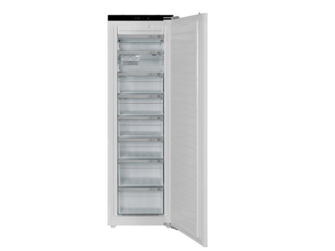
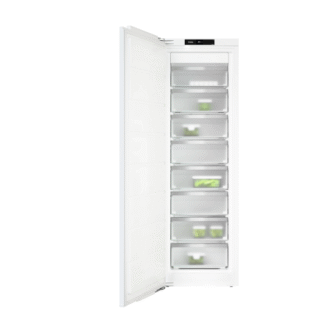
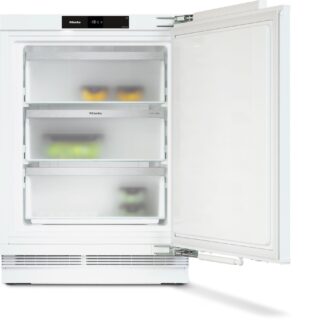
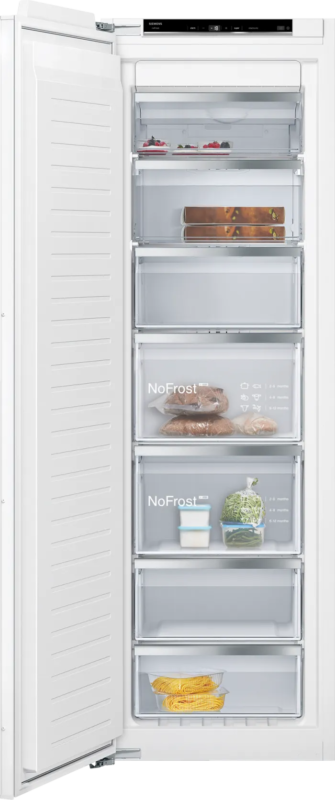


Fridges are a kitchen essential, offering crucial cooling to keep food fresh and drinks cold. They come in a range of sizes and styles, from compact to Tall Larder Fridges, providing versatile storage options for any home. Energy-efficient designs ensure cost-effective operation while preserving the freshness of your groceries.

Fridge freezers provide the perfect combination of refrigeration and freezing in a single unit, making them the ultimate food storage solution. Our selection of refrigerators are available in various styles and sizes, they offer versatile storage to suit any kitchen. Energy-efficient models ensure your food stays fresh while reducing utility costs. Explore our selection for the ideal blend of style, convenience, and performance.

A Wine Cooler is ideal for a wine lover, providing precise temperature control to maintain the flavour and quality of your collection. They come in various sizes to suit both small and large collections. With sleek designs, these fridges integrate seamlessly into any home, ensuring your wines are kept in perfect conditions for an exceptional tasting experience.