
Elica Chimney Hoods
Shop Elica chimney hoods for wall-mounted and island kitchen installations. Choose from traditional stainless-steel extractor canopies, contemporary glass designs, angled cooker hoods and ceiling-suspended island chimney extractors.
Compare Elica chimney cooker hoods by installation type, width, extraction performance, operating noise and finish. Explore ducted and recirculating options, with designs suited to cooking areas against a wall or positioned on a kitchen island.
Choosing an Elica Chimney Cooker Hood
Elica chimney hoods are designed for extraction above cooking surfaces positioned against a wall. The range includes traditional canopy shapes alongside angled, vertical and minimalist wall-mounted designs.
The most suitable extractor depends on the hob width, available wall space, kitchen layout and how cooking vapours are captured. Hood appearance matters, but extraction performance, installation clearances and the available ventilation route are equally important.
Elica Wall-Mounted Cooker Hood Types Compared
| Hood Design | Main Characteristics | Best Suited To | What to Check |
|---|---|---|---|
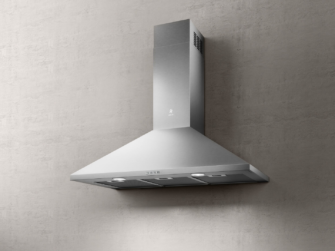
| Traditional Chimney Hood | A visible overhead canopy with a chimney-style housing, including models such as Cruise and Tamaya | Kitchens requiring a conventional extractor above a wall-mounted hob | Canopy width, mounting height and available duct route |
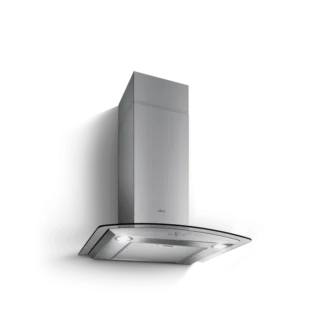
| Angled or Glass-Fronted Hood | A sloping or decorative front panel, including designs such as Adele and Ascent | Kitchens where a less projecting appearance is preferred | Extraction inlet position, wall clearance and cooking-area coverage |
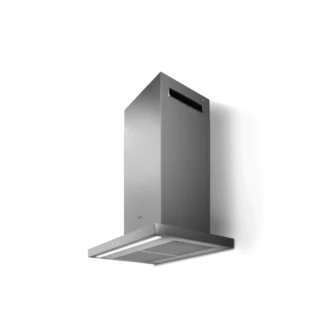
| Slim or Architectural Wall Hood | A minimalist housing with a compact or adjustable profile, illustrated by Haiku | Kitchens where extractor depth and alignment with cabinetry matter | Actual body dimensions, cabinet alignment and installation depth |
| Specialist Wall Hood | Corner-mounted or modular designs, including Acuta and Open Suite | Unusual kitchen layouts or designs requiring a specific extractor arrangement | Mounting structure, footprint, accessories and exact installation configuration |
These are design differences rather than guarantees of extraction performance. Individual models vary in their airflow, noise, controls and compatible ventilation configurations.
Traditional Elica Chimney Extractor Hoods
Traditional chimney hoods provide a familiar overhead extraction arrangement above a hob positioned against a kitchen wall.
Models such as Elica Cruise, Tamaya and Thin offer different canopy profiles, widths and control layouts. Depending on the model, the visible chimney section may accommodate ducting leading towards an external outlet.
These designs are worth considering when replacing an existing wall-mounted extractor or planning a kitchen with a conventional overhead ventilation arrangement.
Before ordering, check the canopy dimensions, chimney extension requirements and the available space between adjacent cabinets.
Angled and Glass-Fronted Elica Cooker Hoods
Angled cooker hoods use a sloping front panel rather than a conventional horizontal canopy. Elica offers wall-mounted designs in glass, stainless steel and other finishes, including the Ascent and Adele families.
An angled front can make the area above the hob feel less obstructed, particularly where the extractor is positioned at head height. However, the visible width and shape do not tell the whole story about cooking-vapour capture.
Compare the extraction inlet position, published airflow, minimum installation distance and the location of the active cooking zones.
Selected Elica wall-mounted models also feature touch controls, delayed switch-off, app connectivity or automatic interaction with compatible induction hobs. These functions depend on the exact model and version.
Slimline and Architectural Elica Wall Hoods
Elica also offers slim and architectural wall-mounted hoods designed to work with contemporary kitchen cabinetry.
The Haiku family illustrates the importance of installation depth. Selected Haiku wall-mounted models allow the hood body to be adjusted to align more closely with surrounding wall cabinets.
This can be useful where protruding extractor housings would interrupt the kitchen design, but accurate installation measurements remain essential.
Some specialist Elica wall hoods can also be customised with decorative finishes or furniture-matching panels. When choosing one of these designs, check the manufacturer's requirements for panel materials, attachment and service access.
Specialist Wall and Corner Extractors
Not every kitchen has a straightforward uninterrupted wall above the hob. Elica offers specialist extraction arrangements for unusual layouts.
The Acuta corner hood is designed for a cooking area positioned within a kitchen corner. Its mounting footprint and installation requirements differ from those of an ordinary straight-wall chimney extractor.
Modular designs such as Open Suite combine wall-mounted extraction with additional furniture and lighting elements. These require more detailed planning than a standard replacement cooker hood.
For specialist installations, confirm the wall construction, fixing points, appliance dimensions, ducting arrangements and the exact components being supplied.
What Size Elica Chimney Hood Do You Need?
Choosing the correct width starts with the size and position of the hob beneath the extractor.
Elica offers wall-mounted cooker hoods in conventional 60cm and 90cm sizes, alongside compact, wider and specialist designs.
When comparing widths:
- 60cm hoods: Commonly considered for standard-width cooking areas where space above the hob is limited.
- 90cm hoods: Worth considering for wider cooking surfaces or where additional canopy coverage is desirable.
- Compact or narrow designs: May use a different extraction arrangement from a conventional wide canopy and should be assessed against the intended hob.
- Wider or specialist hoods: Can suit large cooking areas, architectural kitchens or non-standard installations.
A hood with a wider canopy can help cover a larger cooking area, but effective extraction also depends on the inlet position, mounting height, airflow and surrounding air movement.
Always compare the actual appliance dimensions and manufacturer's installation instructions rather than choosing by nominal width alone.
Installing an Elica Wall-Mounted Cooker Hood
Before purchasing an Elica chimney hood, check the wall structure, available mounting height and the route for any ventilation ducting.
Important installation checks include:
- The minimum distance required above the selected induction, electric or gas hob.
- Available wall space and clearances around adjacent cabinetry.
- Suitable fixing points and wall construction for the appliance weight.
- Chimney height, extension sections and ceiling clearance where applicable.
- Electrical connections and access for servicing.
- Suitable ducting dimensions or recirculation accessories.
Minimum mounting distances vary by model. For example, Elica's published instructions for selected Cruise cooker hoods specify 50cm above induction or radiant electric hobs and 65cm above gas hobs. Other Elica wall hoods have different requirements.
Always use the installation instructions for the exact appliance and observe any more restrictive requirements specified by the hob manufacturer.
Ducted or Recirculating Elica Chimney Hoods?
Many Elica wall-mounted cooker hoods support external ducting or compatible recirculating configurations. However, the necessary components and available installation options vary between products.
Ducted extraction sends cooking air outside, removing extracted moisture and odours from the kitchen. It requires a suitable external outlet and a correctly planned ducting route.
Recirculating extraction passes cooking air through grease and odour filters before returning it to the room. It can be useful where an external ventilation route is impractical, but it does not remove moisture outside.
Before ordering, confirm whether the hood is supplied in the required configuration and whether compatible filters or conversion components are included.
For more detailed advice, read our Elica Ducted vs Recirculating Cooker Hoods guide.
Extraction Performance, Noise and Controls
Airflow and Everyday Noise
Elica publishes cooker hood airflow in m³/h and operating noise in dB(A). When comparing appliances, check the figures at similar fan settings and for the intended ducted or recirculating configuration.
Maximum boost airflow can be useful for intensive cooking, but everyday operating noise is especially important in kitchens connected to dining or living spaces.
Long or restrictive ducting routes, dirty filters and unsuitable installation can also affect the performance and noise of the finished extraction system.
Lighting and Connected Features
Elica chimney hoods offer different control arrangements, including mechanical buttons, electronic controls and touch interfaces.
Selected models feature LED task lighting, adjustable lighting, delayed switch-off, filter-maintenance indicators or connectivity with compatible Elica appliances.
Wi-Fi, voice control and automatic hob-to-hood operation are model-specific features. Check the product specification if these functions are important to your purchase.
Do You Need an Elica No Drip Cooker Hood?
Condensation can form when warm, moisture-laden cooking vapours meet the cooler surfaces of an extractor. In some kitchens, accumulated droplets may fall back onto the hob or cookware.
Elica offers selected wall-mounted hoods with No Drip technology, designed to reduce condensation forming on relevant surfaces and manage residual moisture.
This is particularly worth considering if water regularly drips from your existing hood when boiling or steaming food above an induction hob.
However, No Drip is not necessary for every kitchen, and it does not replace effective ventilation.
Our Elica No Drip vs Standard Cooker Hoods comparison explains how the technology works, its limitations and when the additional cost may be worthwhile.
Cleaning and Maintaining Elica Chimney Hoods
Regular cleaning helps maintain extraction performance and reduces grease build-up.
Removable grease filters should be cleaned according to Elica's instructions. Recirculating models also require compatible odour filters, which may need periodic replacement or regeneration.
Glass, stainless-steel and specialist decorative surfaces may have different cleaning requirements. Use suitable products and follow the manufacturer's guidance to avoid damaging finishes.
Some Elica cooker hoods provide filter-maintenance reminders, but these do not remove the need for routine checks.
Elica Chimney Hood FAQs
What is the difference between a chimney hood and an angled cooker hood?
A traditional chimney hood typically has a horizontal extraction canopy and a visible housing above it. An angled cooker hood uses a sloping or decorative front panel. Both can be wall-mounted, but their extraction inlets, dimensions and mounting requirements differ.
Can Elica chimney hoods be recirculating?
Yes. Many Elica wall-mounted cooker hoods support recirculation with compatible odour filters or conversion accessories. Check the exact model and supplied components before ordering.
Should a cooker hood be wider than the hob?
A suitably wide canopy can improve coverage, especially above a larger cooking surface. However, the correct selection also depends on the hood's extraction design and mounting position. Follow Elica's guidance for the individual appliance.
How high should an Elica chimney hood be installed?
Installation height varies by model and by the type of hob underneath. Always check the manufacturer's minimum clearances for induction, electric and gas cooking rather than relying on a single universal height.
Are angled cooker hoods suitable for induction hobs?
Yes, when the hood is correctly specified and installed. If condensation regularly drips onto the cooking area, a compatible Elica No Drip model may also be worth considering.
Do Elica chimney hoods need charcoal filters?
Charcoal or other compatible odour filters are generally required for recirculating operation. Ducted installations normally use grease filtration without additional odour filters. Requirements vary by model.
Explore More Elica Cooker Hoods
Browse our full Elica Cooker Hoods collection, or compare Elica Integrated Cooker Hoods if you prefer a more concealed installation within kitchen furniture.
For cooking areas positioned away from the wall, explore Elica Island Cooker Hoods. You can also discover the wider Elica Appliances range.