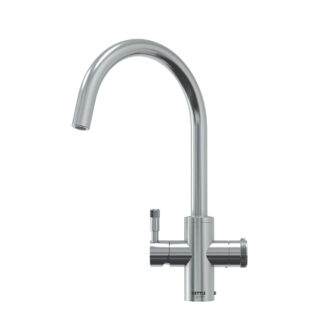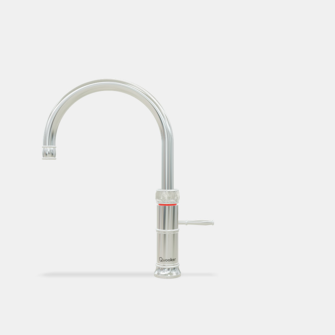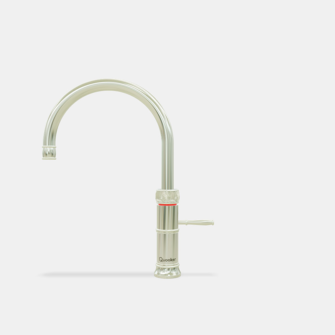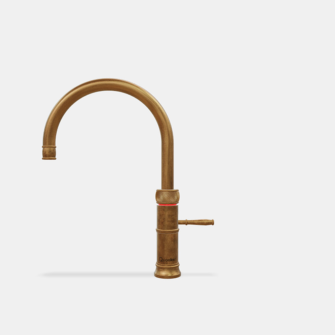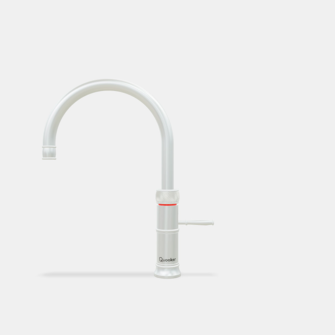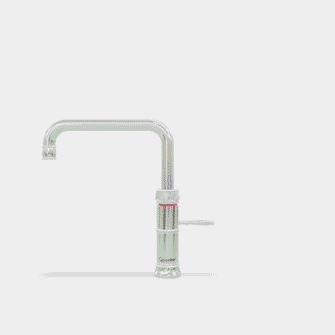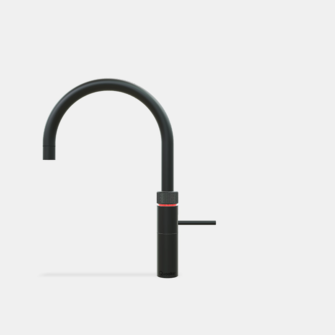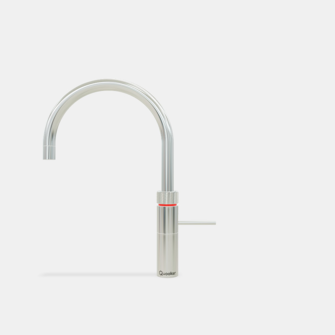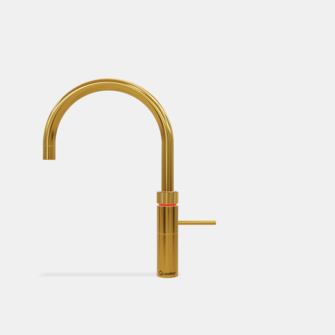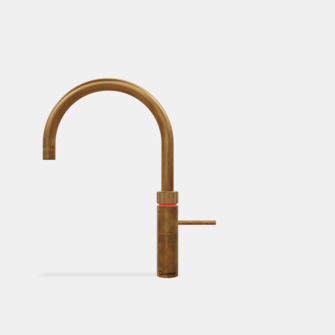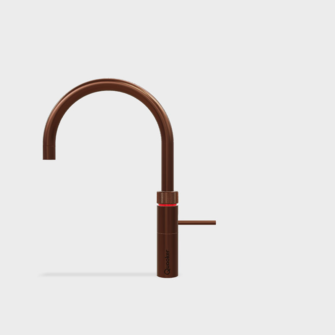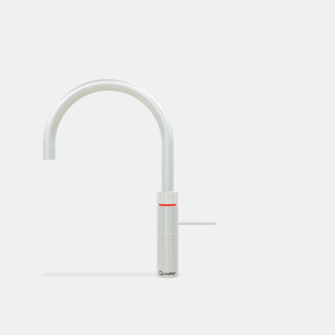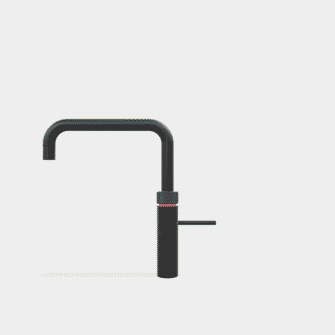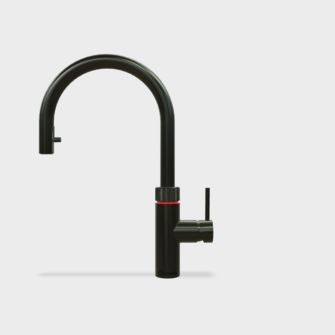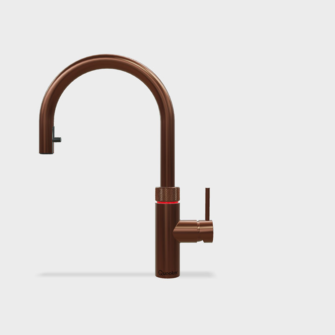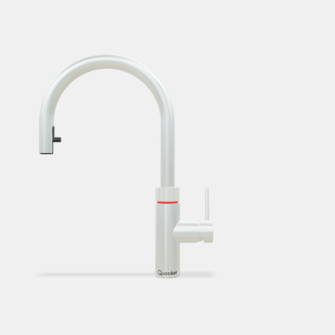

Boiling Water Taps & Instant Hot Water Taps
Boiling water taps provide 100°C boiling water directly at the sink, removing the need to boil a kettle for drinks, cooking and food preparation. Choose from all-in-one taps that also handle normal hot and cold water, 4-in-1 systems with filtered drinking water, or standalone boiling-water taps designed to sit alongside an existing mixer tap.
Before choosing a system, check the tap configuration, under-sink tank size, available electrical supply, water pressure and whether your kitchen already has a suitable hot-water feed. These installation details can be more important than the tap finish itself.
Choose your boiling water tap
- All-in-one boiling, hot and cold taps: replace a conventional kitchen mixer and supply normal hot and cold water as well as boiling water from one tap.
- 4-in-1 boiling water taps: add a fourth water function, commonly filtered drinking water. Check the individual system because manufacturers use different definitions of 4-in-1 functionality.
- Standalone boiling-water taps: provide boiling water through a separate tap while allowing you to retain your existing hot and cold mixer.
- Pull-out hose boiling water taps: combine boiling-water functionality with a flexible hose for everyday rinsing and sink cleaning. The hose arrangement and boiling-water safety mechanism vary by manufacturer.
How to choose a boiling water tap
Start with the under-sink tank
The tap above the worktop is only one part of the system. Boiling water is stored in an insulated tank beneath the sink, so check the available cabinet height, width and depth before ordering. Larger-capacity tanks provide more boiling water before reheating but occupy more cupboard space.
Quooker systems can be configured with different tanks according to the kitchen's water supply. The compact PRO3 provides 3 litres of boiling water. COMBI and COMBI+ use 7-litre tanks but are intended for different plumbing arrangements. QETTLE systems are available with 2, 4 or 7-litre boilers, allowing capacity to be matched more closely to household demand.
| System type | What it provides | Typical use |
|---|---|---|
| Compact boiling-water tank | Boiling water only, such as a 3L Quooker PRO3 | Kitchen already has a convenient conventional hot-water supply |
| Cold-feed hot and boiling system | Boiling water plus normal hot water from the under-sink system | Useful where there is no suitable hot-water feed at the sink |
| Hot-water booster system | Boiling water plus faster access to normal hot water | Useful where a hot supply exists but has a long pipe run to the kitchen |
| 4-in-1 filtered system | Hot, cold and boiling water plus filtered drinking water | One-tap installation where filtered drinking water is also required |
3-in-1 or 4-in-1?
A 3-in-1 tap normally combines conventional hot water, cold water and boiling water. A 4-in-1 system adds another function, commonly filtered drinking water. Do not choose purely from the number in the product name: check exactly which four water functions are supplied and whether extra filtration or chilling equipment is included.
All-in-one or standalone?
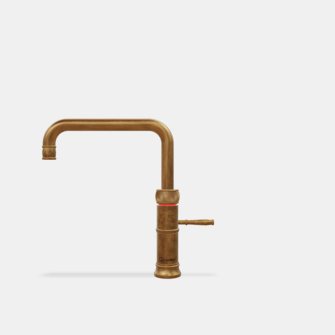
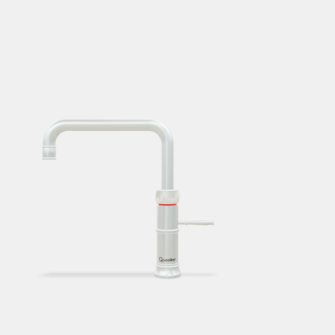
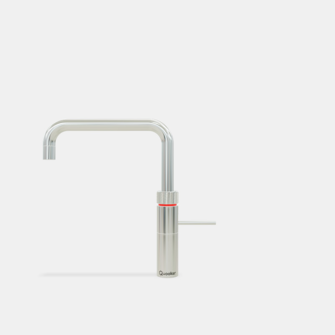
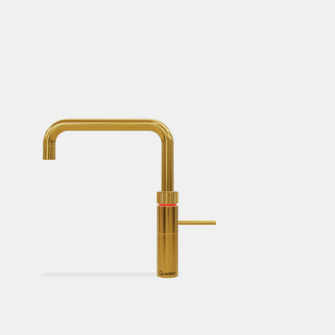
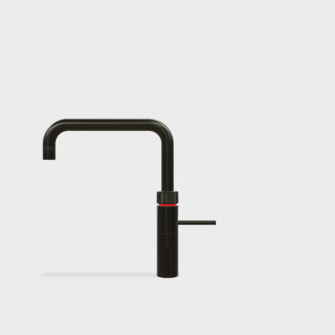
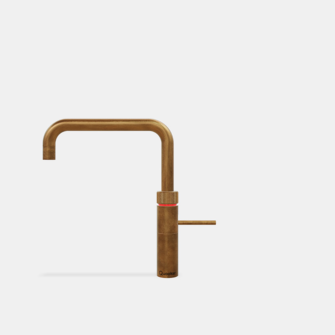
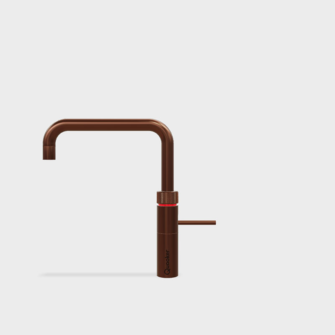
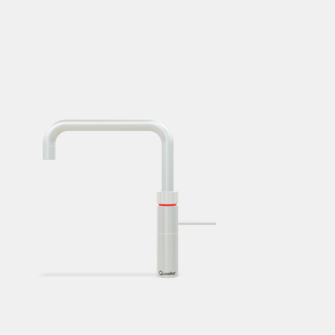
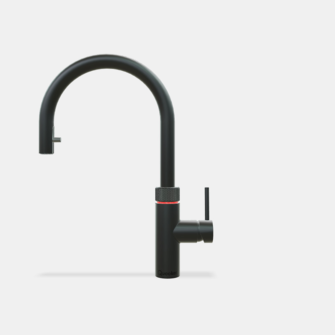
An all-in-one tap replaces the main sink mixer and reduces the number of fittings around the sink. Quooker Fusion, Front and Flex are examples of taps that combine normal hot and cold water with boiling water.
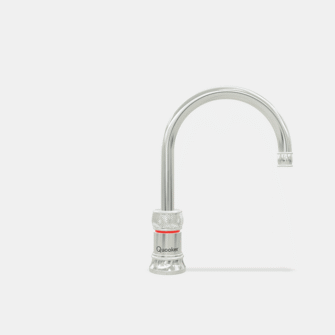
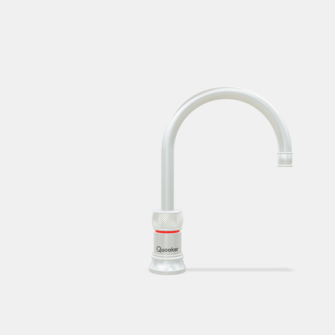
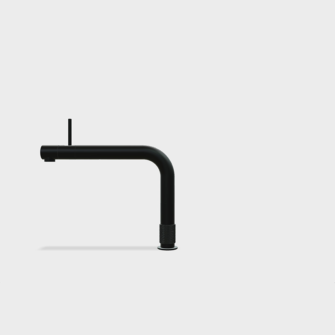
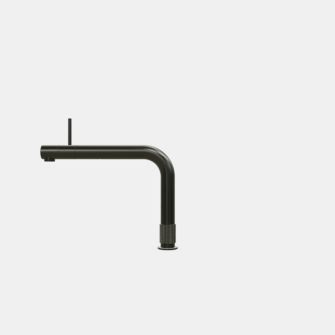
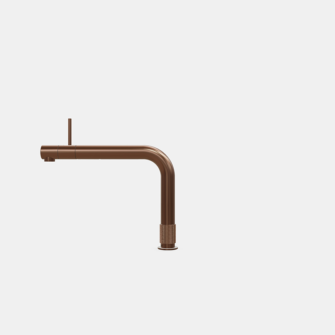
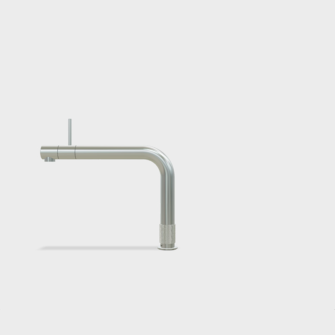
A standalone boiling-water tap is a better fit when you want to retain an existing mixer or prefer to keep boiling water physically separate. Quooker Nordic single taps use this layout and sit alongside the normal kitchen tap.
Do you need a pull-out hose?
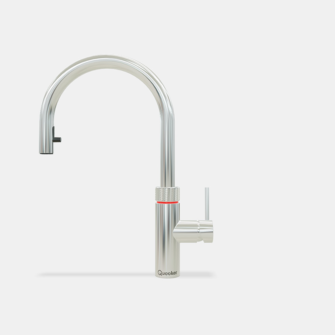
A pull-out hose is useful for rinsing large pans, cleaning the sink and directing normal hot or cold water around the bowl. The Quooker Flex combines this layout with boiling-water functionality. Its boiling-water supply is disabled when the flexible hose is pulled out, so the hose itself is used for non-boiling functions.
Installation requirements
Boiling water taps require more planning than an ordinary mixer tap. Allow enough space beneath the sink for the boiler and any filter or chilled-water equipment, together with suitable plumbing and electrical connections.
Tap-hole requirements vary. Quooker Fusion, Flex and Front installations use a 35mm tap hole, while a Quooker Nordic single tap uses 32mm. QETTLE systems use a 35mm hole. Quooker specifies a standard earthed 13A socket for its boiling-water tank, while QETTLE also requires a standard 13A socket. Additional chilled-water equipment can require extra power and cabinet space.
Water-pressure requirements also differ by system. Always check the individual installation guide rather than assuming that an existing kitchen mixer connection will automatically be suitable.
Boiling water tap safety
Boiling-water controls are intentionally different from ordinary mixer operation. Quooker uses a child-resistant double-push-and-turn action for boiling water, while QETTLE uses a two-stage safety mechanism and a cool-touch spout. These features reduce accidental operation, but 100°C water still needs to be treated with the same care as boiling water from a kettle or pan.
Filtered, chilled and sparkling water
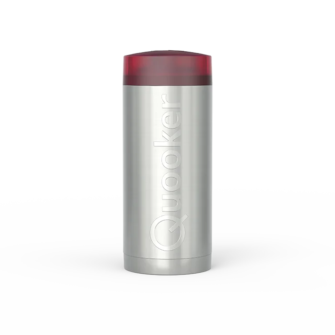
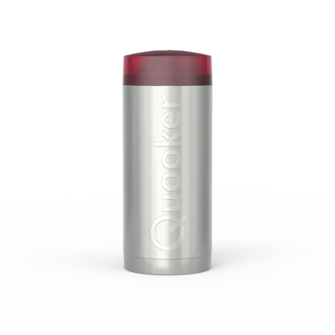
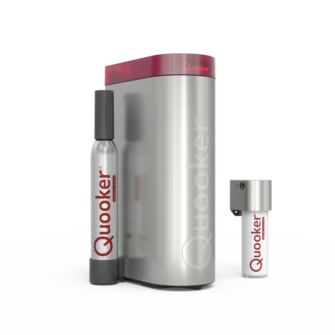
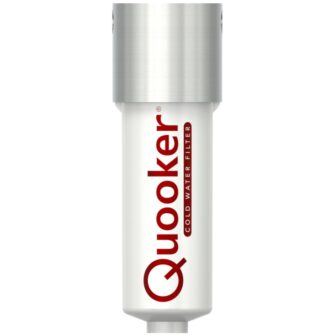
Filtered water can either be part of the standard tap system or added through extra equipment. QETTLE 4-in-1 systems combine boiling water with filtered drinking water. Quooker systems can be paired with a Cold Water Filter, while the optional CUBE adds filtered chilled and sparkling water to compatible systems.
Extra filtration and chilling equipment occupies additional under-sink space, so include it in the cabinet plan before ordering rather than treating it as a later accessory.
Energy labels and running costs
Do not compare boiling water taps solely by an appliance-style energy label. The energy rating may relate to the under-sink hot-water tank rather than the tap itself. For example, Quooker applies an A energy class to its COMBI and COMBI+ hot-water tanks, while its boiling-only PRO3 does not have an equivalent energy-label classification.
Tank capacity, insulation, household usage and whether the system is also supplying conventional hot water all affect how the installation will be used. Compare the complete tap-and-tank configuration rather than an isolated tap body.
Cleaning, filters and limescale
Maintenance requirements depend on the manufacturer and local water hardness. Filter cartridges and aerators need periodic attention, while boiler tanks may also require descaling or cleaning in hard-water areas.
QETTLE specifies replacement of its Q08 filter cartridge every six months and an annual boiler-tank deep clean. Follow the maintenance schedule supplied with the exact system you purchase, particularly in hard-water areas.
Shop Quooker boiling water taps
For a brand-specific range, browse our Quooker boiling water taps. You can also compare Quooker Flex taps, Quooker Fusion taps and Quooker Nordic taps, or view the wider Quooker range.
Frequently asked questions
Do boiling water taps really dispense 100°C water?
The boiling-water systems in this category are designed to provide true boiling water at the tap. This is different from some products marketed more generally as instant hot-water taps, which may dispense water below boiling point. Check the individual specification before purchase.
What is the difference between a 3-in-1 and 4-in-1 boiling water tap?
A 3-in-1 tap normally supplies hot, cold and boiling water. A 4-in-1 system adds another function, usually filtered drinking water. Manufacturers do not always use the terminology identically, so compare the listed water functions rather than relying on the name alone.
What size boiling water tank do I need?
Choose according to both usage and available cupboard space. Smaller tanks suit normal household drinks and food preparation while larger tanks provide more boiling water before reheating. Check the dimensions as well as the litre capacity because the tank, hoses and filters all require clearance.
Does a boiling water tap need electricity?
Yes. The under-sink boiler is electrically heated and requires an appropriate power connection. Current Quooker and QETTLE installations use a standard 13A socket for the main boiling-water tank. Extra equipment such as chilled-water systems may require another supply.
Can I keep my existing kitchen mixer tap?
Yes, if you choose a standalone boiling-water tap designed for this purpose. A standalone design sits beside the existing mixer, whereas an all-in-one tap replaces the normal mixer and handles hot, cold and boiling water from one fitting.
Are boiling water taps safe?
They use dedicated boiling-water controls to make accidental operation more difficult. Safety arrangements vary by manufacturer, so follow the operating instructions supplied with the tap and remember that the dispensed water is still boiling.
Can a boiling water tap provide chilled or sparkling water too?
Some systems can. Quooker's optional CUBE adds filtered chilled and sparkling water to compatible installations, while QETTLE offers chilled-water options for suitable systems. These additions require extra under-sink space and may need additional electrical connections.
Do boiling water taps need filters changing?
Maintenance varies by system. Some have replaceable drinking-water or limescale-control cartridges. QETTLE specifies a filter change every six months and an annual boiler-tank clean. Check the manufacturer schedule for the exact product and local water hardness.